Showing posts with label true. Show all posts

09 October 2017

10 Questions for Calico Jack

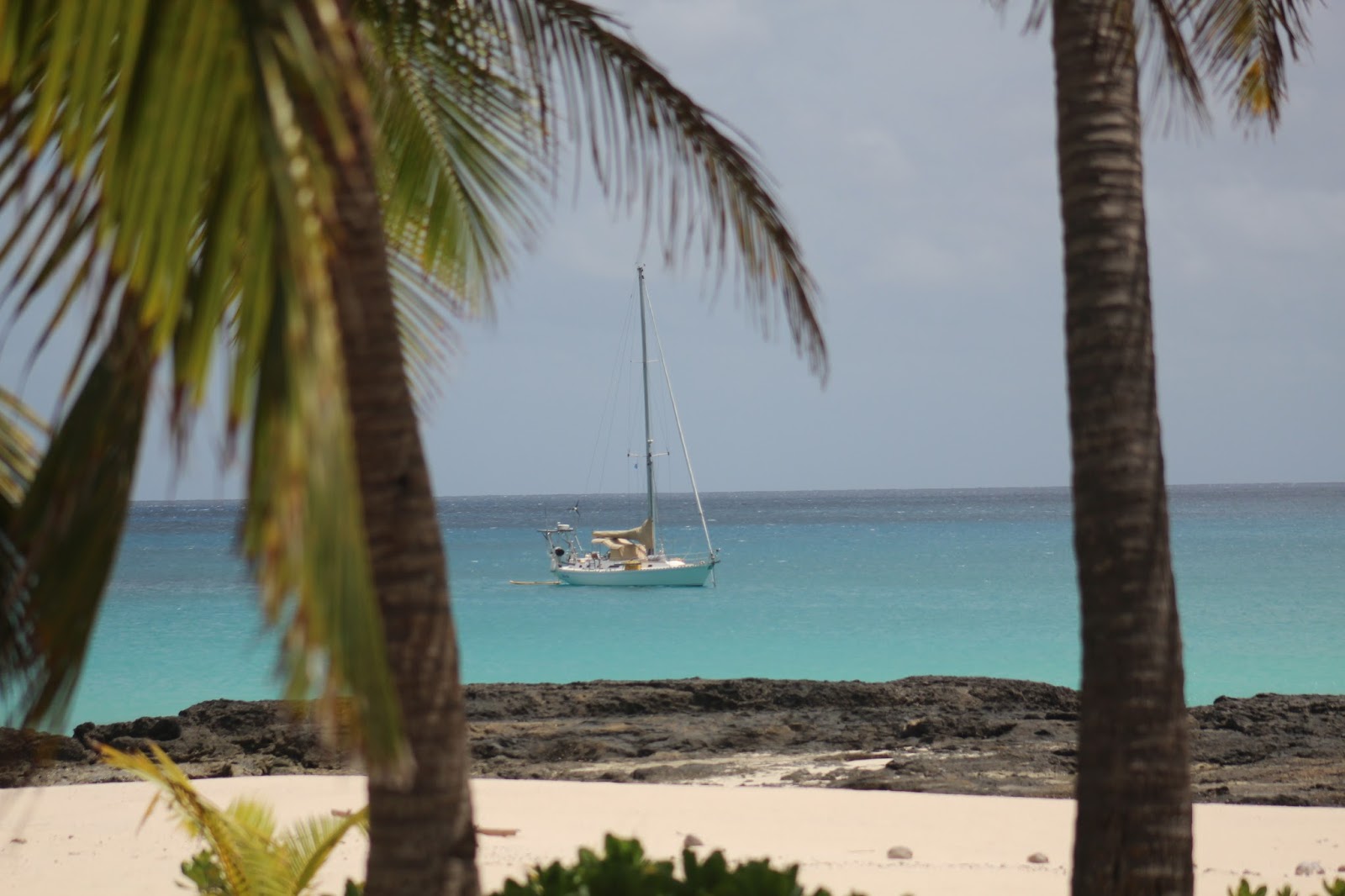
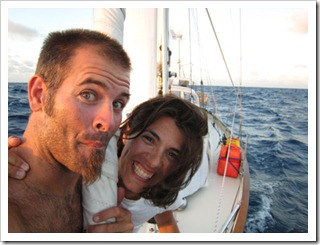
Travis and Joanne Scott circumnavigated from the end of 2012 until early 2016 aboard SV Calico Jack, a 1972 Chris-Craft Caribbean 35, hailing from Key West, FL, USA. Their general route was from Florida, through Western Caribbean, and the Panama Canal, then across the Pacific to Bundaberg, Australia. From Australia they sailed the Great Barrier Reef of Australia to Indonesia, across the Indian Ocean to South Africa. They then sailed across the South Atlantic to South America, up the Eastern Caribbean, through Bahamas and returning to Key West, FL, USA.

You can learn more about their circumnavigation on their website.

Having cruised both the Atlantic and the Pacific, how do they compare?

We expected the South Pacific Ocean to be the best sailing conditions we would find, and while they were decent enough, we found our longer passages to be slow and rolly, with lighter than expected winds and large swells coming up from the deep Southern Ocean. (We were told by local islanders "it was a very unusual year"). But other than the first long passage, the island hopping style of cruising with short jumps in between turns the S Pacific into a cruisers dream.  You could spend a lifetime there and still not see it all.  On the contrary, we did not know what to expect of the South Atlantic, yet found that to be the best cruising conditions of our whole trip.  Wind, seas and currents all lined up in our favor for a change, and we had stable enough conditions that we could set the spinnaker and leave it for days without tending to it.  Also, much shorter jumps between landfalls.

Are you attracted more to sailing itself or cruising-as-travel and has that changed over time? 

Cruising-as-travel, definitely.  Prior to getting together, my wife and I had both been avid travelers, and the cruising lifestyle allows us to travel more extensively and on a better budget. Our boat is our home, and the thought of taking our home out for a day sail just seems like too much work. But casting off the lines and setting out over the horizon... now that's exciting!

Finish this sentence “One thing I’ve learned about passage planning is…

prepare meals ahead of time.

There are many, many books out there on the subject of passage planning and weather routing. With a little common sense and a good understanding of weather patterns, most passages will be pleasurable.  But here's something we did that made eating while on passage enjoyable: Prepare a few meals before departure. No one likes to cook in a galley when its rough out, at least not us. We would start a few days before setting out, and make a bunch of "one pot" meals (chili, hearty stew, curry, etc), then measure out a portion for 2 people into a Ziploc baggie, and freeze it.  Then it was fast and simple to quickly heat up a nutritious meal without spending lots of time getting tossed around down below, or watching all your ingredients go flying off the counter top!


What is your most common sail combination on passage?

Our west-about route pretty much had us sailing down wind almost all the time.  With our sloop rig, we predominantly used a single head sail only, either jib or spinnaker.  If we set the main and the jib, we found the large main would block the jib and rob it of the wind.  Wing and wing sailing is beautiful, but a lot of work and diligence to maintain that configuration for long periods of time.  We found our speed of roughly 5 knots could be achieved with a single head sail, which could also be easily operated from the cockpit by one person in times of changing winds or deteriorating weather.  We are all about easy, and the little tiny bit of speed we lost was not worth the extra effort.

With the benefit of hindsight, what are the boat selection criteria you would use to purchase a boat for long term cruising?

All the old cruising books describe the ultimate cruiser as a ketch rig, full keel with the rudder attached, heavy displacement tub.  We have seen all varieties of boats out there doing it, and doing it just fine.  Mono- and Multi-hulls, sloops, ketches and schooners, big and small and everything in between. Just pick the boat that suits your needs and the cruising grounds you plan to go to.

We had thought of up-sizing to a larger boat before our next cruise, but have decided to stay smaller for reasons that work best for us.

Smaller boat = shallower draft. At only 4.5', Calico Jack can make nearly any pass, or anchor up close to shore when needed. It is a lot cheaper to do a refit or routine maintenance on a smaller vessel.  We found many places were charging in 10' length increments (30-40', 40-50',etc) and the difference between was sometimes significant.  We were small enough to secure dockage when we needed to, at times when marinas were full and larger boats were being turned away.  We managed to pack into 35' everything we needed for long term cruising, and still had room enough for two people to be comfortable.  .

In your own experience and your experience meeting other cruisers, what are the common reasons people stop cruising?

For us, we have taken a break from cruising simply because we ran out of money.  A few years to replenish the coffers and we'll be back out there again.

From our cruising friends we have met who stopped cruising, some of them had reached their goal or destination, some ran out of money like us, some had catastrophic damages to their boats, and some had those same catastrophic damages to their relationships.  Offshore cruising can be difficult to relationships, and we saw it affect many couples... older, younger, married, dating, family, straight or gay... no one is immune.  Proper communication is key.  Fears and concerns, hopes and dreams should all be discussed and shared. Teamwork and flexibility will get you through the worst situations, but only if both parties are on the same page.

What is something that you read or heard about cruising, that you didn't find to be true?

Its not totally free out there anymore.  There are still some free cruising grounds, but it is more common to find areas that charge small anchoring fees, or cruising permits. Many places have installed moorings to protect the environment and no longer allow anchoring. Yachties are often seen as walking ATM's (especially in the eastern Caribbean). And we all know anything with the word "marine" on it will cost more!  It is still possible to cruise on a small budget, but be prepared to either pay the local costs or to look for another place.  Bitching about it, or even worse, sneaking out without paying only makes the rest of us look bad.

What piece of gear seems to break the most often?

It all breaks eventually!  Preventative maintenance helps, but the wear and tear of constant use will eventually win.  In our case, we blew our transmission, a few sails, the auto-pilot, a fresh water pump, our ice maker, and more little things than I care to remember. But none of this ruined our experience, and even empowered us when we were able to fix it ourselves, or added to the adventure of trying to source parts in other languages.  Some things we never did fix, realizing we never needed them at all... like our ice maker!

Share a piece of cruising etiquette

Don't anchor on top of your neighbor! (unless you are French, then its ok. Every French port we have anchored in was the same.  Its just what they do, get used to it.  Besides, it IS convenient to be able to hand a glass of wine to your neighbor when he runs out.)  But seriously though, it may seem like common sense to some, but to many they don't seem to quite understand that anchoring is NOT the same as "parking" your boat.  Take into account not only your depth and scope and swing radius, but also the same for your neighbors.  If in doubt, dinghy on over and introduce yourself to your neighbors, and talk to them. Maybe they are ok with how close you are, or maybe they are not. Or maybe they have local knowledge of the area that will change your mind about being that close. At the very least they will know your are a conscientious cruiser.  Remember: "last one to anchor, first one to move"

We had one very tight anchorage in Grenada, and after looking for a spot for about 45 minutes, we picked a spot between 2 boats (one we knew, the other we didn't) which left just barely enough swing room.  Our unknown neighbors were busy giving us the stink eye from their cockpit.  Once we were sure the hook was set, we went over to them and explained why we anchored where we did, and asked if they were ok with it.  They understood it was tight, and thanked us for checking with them.  As it turned out, we all became really good friends and we hope to share another anchorage with them someday.

What question do you wish I would have asked you besides the ones I've asked you and how would you answer it?

"What do you do for watch schedules on passages?"

As with any vessel, someone must be "on watch" at all times.  This can be difficult while cruising single- or short-handed.  We have had this conversation with other cruisers and have seen a whole rainbow of watch schedules... some good and some bad.  We buddy-boated for a while with a couple who did a strict 4 on/4 off, but they arrived in port exhausted and needed a day to recover.  We also met two ladies who did NO watch at night... after dinner they both went to bed and trusted in the auto-pilot and radar on all night!  Aboard Calico Jack we used a fairly relaxed and flexible schedule of 6 on/6 off during the day and 3 on/3 off at night.  This allowed one of us to get a solid block of sleep, while the 3 hour watches at night were fairly short and easy to stand.  We always arrived in port well rested, and in times of heavy weather or when there was a need for both of us on deck, we always felt alert and ready.  Of course, what watch schedule works best for YOU is the one you should do.  This is just our observations and what we have found to be best for us.  

14 August 2017

10 Questions for Bella Vita

Brett & Stacey Hoopes have been cruising since 2012 aboard SV Bella Vita, a 1995 Hylas 45.5, hailing from Seattle, WA, USA.

From Seattle, they sailed down the west coast to Mexico, then across the Pacific (French Polynesia, w, both Samoas, Tonga, NZ, Fiji) then Vanuatu, New Caledonia, Australia, Indonesia and are currently in Malaysia.

You can learn about their cruise on their blog.

They say: "I worked in the boating industry for 10 years (Marketing Manager for Fisheries Supply) and Brett worked as a Sonographer at the Seattle Cancer Care Alliance before we left.  While there, Brett met and cared for many vibrant people who passed away from cancer before their time – many of who had big plans and dreams for when they retired….that they never got to do.  This strongly reinforced our decision to go cruising while we were still young enough to really enjoy it instead of waiting until we retired.  Life is short and you never know what will happen."

Tell me your favorite thing and your least favorite thing about your boat.

Bella Vita is an amazing boat – the perfect size (IOHO) and strong enough to withstand big seas.  We’ve always felt like she could handle WAY more than we can, so probably my (Stacey’s) favorite thing is how safe I feel aboard her at sea.  Brett loves how well-thought out and laid out she is.  My least favorite thing is that it doesn’t have a washing machine aboard (hope to rectify that some day!) and Brett’s is that we can’t access the anchor locker from the deck.

What is the next piece of gear you would add to your boat if it were free?

Brett:  High quality insulation around our fridge.  This has been a MAJOR issue ever since we got to warmer climates.

Stacey: A washing machine!

What is something that you read or heard about cruising, that you didn't find to be true?

Living in the USA, there is a lot of press devoted to how dangerous many parts of the globe are and how we should be concerned about traveling there – especially in Mexico.  We’ve been out now for almost 5 years and NOT ONCE have we ever felt we were in danger (other than from Mother Nature!).  We’ve been amazed by the kindness and giving nature of the majority of people we’ve met along the way.  They’ve made us feel welcome in pretty much every country we’ve visited.

What is something you think potential cruisers are afraid about that they shouldn't fear? And what is something potential cruisers don't worry about that perhaps they should?

Again – people shouldn’t fear that these places will be dangerous or that people are out to steal from them.  That’s not to say you should leave everything open and invite people to take advantage of you – but you shouldn’t waste time on the fear of the unknown when it comes to foreign lands.  What should people worry about?  THE WEATHER!  Do everything you can to learn about understanding weather forecasts and how to interpret them to aid in your routing.  The ability to know when to sit tight and when to GO is one of the most important parts of cruising successfully.  Brett adds that you should NEVER have a timeline – it will get you into trouble every single time.

Where was your favorite place to visit and why?

Suwarrow – hands down.  You can only get there by boat, and there are only the 2 park rangers that live there – so the area is completely untouched by tourism.  It was amazingly beautiful, an absolute paradise.  While some cruisers complain because you are only allowed to anchor in one area, which is open to winds and filled with coral bomies – we found that it was a little slice of heaven.  Beautiful, clear water filled with marine life, gorgeous huge manta rays, sharks, fish of all kinds and birds galore.  We spent the full 2 weeks allowed there and only wish we could have spent more time.  A close 2nd was the Tuamotos – specifically south Fakarava – which to this day had the BEST snorkeling/diving we have every experienced.

What is something about the cruising culture you like and what is something you dislike?

What we like:  The cruising culture is amazing.  Cruisers are always willing to be there for each other – to lend a hand to help fix something, to rally around a boat in dire circumstances, or to just share a beer after a hard days work.  A perfect example – while we were in Tonga our fridge stopped working and we needed new brushes.  We asked for recommendations from local cruisers on the daily net – and after the net we were contacted by a boat we didn’t know (at the time) named Iolea.  Paul and Kate just happened to also own a Hylas, and wondered did we happen to have a Grunert refrigeration system like theirs?  It turns out they had a spare set of brushes and were happy to loan them to us until we could get new ones delivered (which of course we immediately gave to them).  These two wonderful cruisers resolved our mini-crisis in a matter of hours – so fantastic!  We also love that cruisers have no qualms about visiting another boat and starting a conversation with cruisers they’ve never met….and within minutes they are likely invited aboard for a tour or a refreshment just because you’re sharing an anchorage.  How many people at home have no idea what the names of their neighbors are even though they’ve lived next to them for years?  I love the closeness and community of cruising – you really do make friends for LIFE!

What we dislike:  Watching some cruisers absolutely loose their sh!t with locals over something stupid because they expect the efficiencies of their home in a foreign land.  There is nothing more mortifying than watching a fellow cruiser (especially when they are from your home country) behave badly with the locals.  We are all ambassadors out here and should never forget to treat locals with the respect they deserve, even when things are not going to our liking.  We are guests in THEIR country and should act accordingly.

What type of watch schedule do you normally use while offshore?

During the day we don’t really have a standard schedule – whoever wants to sleep can nap as needed.  At 7pm we institute a 3/4/4/3 schedule, with me (Stacey) sleeping first.  If nothing is happening in the morning, I’ll let Brett sleep until he wakes up naturally.  If one of us hasn’t slept well (up during their offwatch time for sail changes, etc.) we make a concerted effort to get that person the rest they need during the day.  It’s important that we are BOTH functioning as well as possible, so we’ve found this works great for us – but every couple we’ve met is different.  During rough weather we often shorten up the duration as 4 hours on can be exhausting in really bad weather.  When you first start out it’s important to experiment and find out what works best for you and your partner.

Are you attracted more to sailing itself or cruising-as-travel and has that changed over time?

While we both love to sail – we definitely are more attracted to cruising for the travel.  I’ve always loved to travel, but am not fond of flying and hate living out of a suitcase – so the idea of traveling with my home was extremely appealing.  We have loved the comfort of having our floating home when everything around us is constantly changing and unknown – for me, having that little bit that is familiar is really important when you are traveling full time.  These days I sometimes worry that we’ve become true sea gypsies and will never be content to stay in one place for a long time ever again.  I guess time will tell, but as long as we can make the money last we will continue this life for as long as we possible!

Finish this sentence “One thing I’ve learned about navigating is…”

Never trust your charts.  Always keep an active watch near land and assume your charts can be as much as a ¼ mile off.  While our charts (Navionics on our RayMarine system) have been exceptionally accurate in most places, there have been exceptions and it’s imperative to use dead reckoning and all the information you have at hand in conjunction with what the charts are telling you.  We also augment our charts with a program called Ovitalmap on our iPad that allows you to download Google Earth images for offline use.  It has saved our bacon more than once and is brilliant when you are cruising in areas where there are no charts at all.

What question do you wish I would have asked you besides the ones I've asked you and how would you answer it?

How has cruising changed you?

When we first left, we were completely caught up with the rush, rush, rush of city living.  Time just continually flies by and before you know it another year has clicked by and nothing has really changed.  But when you cruise, one of the best parts is living a slower life that is less about acquiring things, and more about acquiring experiences.  It brings home the fact that the people you meet and the experiences you have with them is what life is really about.  Life is nothing without love and learning – about confronting your own personal fears and moving past them, while constantly challenging your personal “safety zones”.  Cruising has made us more patient and less judgmental – more understanding of adversity and how it can change people for the worse or for the better.

I think it took us a good 6 months to really start slowing down and accepting the slower pace of our new life.  Having time back – to be completely in control of our own time and how we use it has been a wonderful gift.  Being able to see the world on a small budget is amazing – something I never even knew was possible until we started cruising.  Now that we’ve slowed down and seen so many different places, experienced so many different cultures, we’ve really begun to understand how similar we all really are at our core.  We’ve seen some amazing things and completely different cultures – but at the end of the day the people we’ve met all have the same basic needs and (for the most part) the same values.  They show pride in their country, love for their families, frustration with their governments, they want the ability to feed and raise their families in a safe environment, and they experience all the same feelings and frustrations we’ve experienced while living in the United States.  What used to seem so amazingly different is actually almost exactly the same, no matter what the culture or religion dictates.  If we  could just get people who haven’t traveled to understand that, what an amazing world we would live in. 

03 July 2017

10 Questions for Dos Libras

Tammy, Bruce, and Jezabelle the cat have been cruising since 2013 aboard Dos Libras, a 1995 Catalina Morgan 45 hailing from Corpus Christi, TX, USA. They traveled down the ICW to the Gulf of Mexico from Corpus Christi to Florida then ICW and Coastal down to the Florida Keys. They turned North up the East Coast as far as Charleston, SC., then spent a season in the Bahamas.  They returned to Florida for a summer and then passed through Bahamas on their way down the Caribbean island chain.

You can read more about their cruise on their website.

They say: "We cruise very slowly.  We’ve spent the past three summers in various marinas plugged into the dock with wifi and air conditioning while doing boat projects.  We may or may not do the same this next summer down south.  

Something changed for us over this past summer in Puerto Rico.  Before then we have always felt “compelled” to be on our way to somewhere/  It is difficult to explain but while in Puerto Rico, we realised that we had no real plan until late in the summer and even then it was just to amble slowly down the Eastern Caribbean chain and then decide.  

Bruce is not getting any younger and the stresses of keeping up with the maintenance and repairs is beginning to wear on him.  At this point we may be looking for a place to stop moving and spend a longer period… but…no plans to return to the US!"


What is something that you read or heard about cruising, that you didn't find to be true? 

I did a lot of research prior to leaving home and found many sources of information.  Gradually over time I have realised that much of the negative information and warnings provided by others has been exaggerated.  Warnings about areas where current is an issue, warnings about shallow waters, warnings about passes or entrances that are tricky. I don’t know if we have just been lucky, or if our skill level is perhaps more developed than the authors of those warnings… but we have taken our boat into places that are supposed to be difficult, with little or no difficulty at all.  That is not to say that a healthy amount of caution is a bad thing. We all have to know our own skill level and what our boat will do, but just don’t be put off completely by what you read. Dig deeper and take current conditions into consideration when making your decision.  You just might miss someplace wonderful if you’re too easily put off.

Finish this sentence “One thing I’ve learned about passage planning is…”  

I have to laugh at this question.  We cruise so slowly and stay so long in some places that we’ve almost forgotten how to plan for passages.  What I consider to be a passage is anything that will require us to establish a watch schedule.  We have found that for the two of us, a two hour watch schedule works best.  It is short enough that we don’t become fatigued, and after the initial sleep, it seems that we are able to fall asleep quickly enough to get a good rest.  I always make brownies or cookies and prepare some pasta salad that is easy to serve and has lots of goodies in it.  I’ve always got my route planned out and we’ve been pretty close in our estimation of the time it will take to arrive with sufficient daylight to safely navigate to our destination.  I guess that is more than one thing isn’t it?  

In your experience how often do you think cruisers spend sailing vs. motoring, coastally vs. on passage? 

We spend a lot more time motorsailing than we ever thought we would.  We always try to sail when possible, but we are not willing to let our boat speed drop below 4 knots for very long before the engine gets fired up.  We have found that the winds are often close to on-the-nose as we’ve been making our way east until now.  But I still hold onto that hope that now that we’ll be traveling in a more N/S direction, we can sail more.  A huge contributing factor that requires motorsailing is that for passages, we would rather wait for conditions that provide a more kindly sea state, which often means lighter winds.  We would rather motorsail in more flat seas than travel under sail alone in seas much over five feet.  Thus far, current has also been an issue - we’ve been traveling against it.  The majority of our longer passages have been with reefed and overtrimmed main to steady the boat, and with the engine on to help us point closer to the lay line.  

What is something about the cruising culture you like and what is something you dislike? 

I like the fact that you can make it what you wish. If you want to have bunches of friends and a full social calendar no problem.  If you want to keep to yourself and see almost no-one that’s OK too.  If I had to come up with a dislike it would be that in some of the more popular Cruiser hang-outs it is sometimes difficult to get OFF of the merry-go-round!

What is a cruising tip or a trick you learned along the way? 

Tea Tree Oil.  I used it a lot the first couple of years out. Now it seems like I find myself using less and less but I believe that is because the mildew has been killed.  I clean my ceilings and walls much less often and my towels don’t get stinky like they used to.  (I use tea tree oil in my laundry soap and in home-mixed cleaners)

What do you miss about living on land? 

Not being wet and salty when I get to where I’m going. Whenever we go ashore in the dinghy it is almost guaranteed that we will be thoroughly splashed either coming or going. Secondly I miss fast internet.  Finding a signal that is fast enough to do much blogging is a constant struggle.  I dream of fast, unlimited internet.
 
Was there anywhere you visited that you thought was overrated (not as good as you had heard)? Was there anywhere you visited that you thought was underrated (better than you had heard)? 

I have found each place we’ve been to be better than I thought it would be in some way or other.  I have a tendency to project past experiences on my expectations for the future.  I have been proven wrong time and again.  Each place is unique and completely different from how I thought it would be.  I have to remind myself of this so that we won’t skip someplace that could be wonderful!
 
Speaking just about your boat (not gear), what is one thing you wish your boat had that it doesn’t and what is one thing your boat has that you wish it didn't? 

I wish we had more deck storage lockers… but then we would have to give up some inside space, so it’s a trade-off.  I can’t really think of anything we wish our boat did not have…

What is the next piece of gear you would add to your boat if it were free?  

A new in-house generator and additional battery amp hours.  Our Fischer Panda has died and we are using portable generators.  While this is doing an adequate job, it is a lot of work for Bruce to charge up the house bank, which he has to do at least once per day, sometimes twice depending upon cloud cover. It is also difficult for us to be “that boat” in the anchorage that ruins a perfectly good sunset with a noisy generator.

What question do you wish I would have asked you besides the ones I've asked you and how would you answer it?

We’ve been asked many times why we chose to round Hispaniola to the west and cruise the southern coast of the Dominican Republic instead of following Van Sant’s instructions to do the northern coast.

We like to review all available resources and then make our own decisions as to when and where to sail.  For us, it seemed more sensible, safer and more comfortable to go the way we did at the time of year we did.  Late in the winter when the norther’s were less frequent and weaker, but still making it down as far as Hispaniola the light wind days just before the north winds arrived would provide us with easy travel east, and then when the winds turned north, the island provided protection from the high winds and waves, but we could still travel east with the north wind to carry us along on a beam reach.  Seas were very flat with the island between us and the  winds blasting off of the Atlantic ocean, so it was perfect.  We experienced none of the danger of being on the northern shore with fewer safe anchorages and much higher seas.

The Mona Passage also seems more benign further south and we had a shorter passage than the northern route.  The timing was much easier without having to worry about the hourglass shoals. Plus the storms that roll off of Puerto Rico don’t affect the southern Mona as much.  I don’t know why anyone would ever choose that route over the one we took.  Note:  It can be a very different experience at a different time of year.  We had help with late season northers.

23 January 2012

10 Questions for DreamKeeper

dreamkeeper1 Gar Duke and Nicole Friend circumnavigated from the winter of 2006 until the summer of 2011 aboard SV DreamKeeper, a Pacific Seacraft 40 hailing from Sausalito, CA, USA. You can learn more about their journey on their website.

They say:  We started in our home port of Sausalito in the San Francisco Bay, CA, and went south in winter to Mexico then across the South Pacific to New Zealand.  Year 2 took us thru Melanesia to Palau, Micronesia, with a 4 month layover in Palau.  Year 3 we dropped south into West Papua/Raja Ampat around PNG into east Indonesia and all the way to Bali, then up to Singapore, Malaysia and Thailand.  Year 4 was a big mile year, first crossing the Indian Ocean and up the Red Sea, thru the Med, across the Atlantic and to the Caribbean to end the year.  Year 5 started heading west to Bonaire, the Kuna Yala of Panama, then thru the Panama Canal, up the central American coast and Mexican coast, and finally Baja-bashed it back to San Diego with the last leg up the California coast to San Francisco.  4 ½ years total San Francisco to San Francisco.

What mistakes did you make in your first year of cruising?

Gar:  there were a lot, but here’s a few:

First mistake we made was day 1 out the gate of San Fran, where we turned left and proceeded to do an overnight passage to Monterey Bay.  We were so fast we had to heave-to in the bay all night in sloppy seas, super cold temps, and pitch black conditions leaving me seasick all night long in sensory deprivation and Nicole needing to deal.  I was a total mess.  In hindsight, we should have planned better and just done a day hop down to Half Moon Bay to finally GO and commit to the journey, but in a much easier way for where we were at then.  Thankfully we had leftover Thanksgiving dinner for brunch the next day in Monterey as I was famished!

Leaving the US without a few spares that we wanted for the South Pacific and thinking they’d be easy to get in Mexico.  Not easy and definitely not easy to ship to Mexico either.  Nicole had to fly back to the US and load up a couple bags full of gear so we had what we wanted for the South Pacific and then still brave the dreaded “green light/red light” at the Mexican aeropuerto customs.  Unlucky you if you get the red light!

FYI, It’s much easier and way cheaper to get everything you think you might need in the US on your boat if you can, but at that time we were still very much “green” on our boat and figuring everything out.  All this being said only because we come from a place of liking to be very self-sufficient and prepared for as much as possible and also our intention to head west quickly across the South Pacific the first season out.  If you stay in Mexico long enough, like most cruisers, you will probably be high-tailing back to good ‘ole USA anyways at some point.

Worrying about and spending time and energy getting a HAM radio license.  So many people told me I should DEFINITELY get this license in Mexico before the SoPac, but, for me, not being a big radio talker, I never really used this with the exception of the services of winlink in the beginning of our journey.  Later, after seeing the advantages and convenience of using the services of UUPLUS email thru our satphone, winlink became only a back-up for us.  

And not to say we never chatted on the SSB with friends or on radio nets, but none of them were ever “Ham only” nets, so my whole ordeal of getting a HAM license was, for me, a waste of time.  If you LOVE to talk on the radio, then by all means, get a HAM, but if not, forget about it and go surfing or do something fun instead.

Nicole: Telling my mom I would call her by a certain date.   My parents bought us a sat phone for emergencies and perhaps more specifically so we could talk while on passage and they wouldn’t worry about us.  I made a bad call and told my mom I would call her by a certain date.  Somehow, we didn’t quite figure the sat phone out while travelling south along the Mexican coast and my phone date was passing.  I knew my mom would be worried sick and start calling anyone she could think of so we had to detour to Abreojos, a tiny fishing village along the Baja Pacific coast, in deteriorating conditions to make that call. We found a phone card and then found the phone. I called to let her know we were fine and then we headed back out through bigger surf and out to our bucking boat.  Note to self, never give anyone a time line you can’t keep.

Describe the compromises (if any) you have made in your cruising to stay on a budget?

Gar/Nicole:  For us, our budget living on the sailboat was a lot cheaper then our budget living on land.  We had just sold our home, cars, and most everything else we owned that wouldn’t come with us and so we axed everything like property expenses, utility expenses, auto expenses, and all the other pieces that add up so quickly living in the US.  In cruising, boat expenses are hands down the most expensive reality.  But…most of the boat expenses can be coined “luxury” expenses like good electronics, a water-maker, a new sail, etc., and you can get by with very little if your boat itself is solid and safe.  

In our opinion you can cruise on almost ANY budget once you own a boat.  It’s all choices and how you tailor your lifestyle and choices around your “wants” in life.   It’s no different then how you choose to live your life on land.  If money is tighter for you cruising, then don’t eat out much or use the engine as much or buy lots of fancy boating gear you don’t really need.  And, lastly, learn how to fix and work on your own boat; that, in itself, will save you lots of money in the long run.

What is something you think potential cruisers are afraid of that they shouldn’t fear?

Gar/Nicole:  Passage-making. It’s scary at first if you have never been offshore on your own boat with a small number of people and we get that.  But, in reality, this is a great time to actually just “be” with the ocean at all times of the day and night that you will most likely never experience any other way. 

For us the first few days are the most difficult of a passage as we are adapting to a new schedule.  But, if you plan well with the weather, make some pre-prepared meals, have a good book (or 2 or 3) put aside, maybe some podcasts or audiobooks for rougher weather, and have a good watch schedule so you get some rest when you need it, you will most likely really enjoy the experience.   Keep a journal or write a daily blog just to keep notes on the little things you see and feel and hear.  It’s a unique experience, embrace it and don’t fear it.

What is something potential cruisers don’t worry about that perhaps they should?

Gar/Nicole: Being thoughtful about locking your gear and boat up.  Cruisers have a tendency to be very lazy sometimes.  Lock up your dinghy and outboard, put away or lock up any gear on deck that is worth anything to you, and lock up your cabin when you are away from your boat.  It seems so simple, but we have seen boats all over the world complaining in hysterics about how someone stole their laptop from their un-locked cabin or stole their unlocked outboard or dinghy in the middle of the night.  Well, did you lock your cabin? “uhhhh…no, I never do…it’s just so hot.”  Did you lock up or raise your dinghy at night?  “Uhhhh….no, it was windy and rough and rainy out and I thought no one would come out on a night like that” (but that’s when they always do).

Cruisers need to realize that no matter what their budget is or how non-fancy their boat is, they are still looked upon as “rich” in almost any country around the world they travel to.  So many of the cultures you will connect to will be living with almost nothing and there are always people on the look out to make a quick buck the easy way.  Also, it felt important for us to acknowledge some communities don’t have things like private property so ours was even more interesting.  You will still stand out even if you are dirt-bagging it with a half sunk boat and not a penny to your name.  Ask any long-term backpacker traveller you meet, it’s not about being paranoid, it’s just being extra-aware of where you are.

What are some of your favorite pieces of gear on your boat and why?

Gar:  Electric anchor windlass and oversized anchor, wind generator, and AIS system.

A good solid and reliable electric anchor windlass with an oversized anchor makes a huge difference when you are cruising.  Of course, these are still luxury items, but they do make life much easier and safer when you drop your hook and don’t worry about it dragging and also know you can always get it back up without a hurting your back in any conditions.  I can’t count the times we have needed to move anchorages in inclement weather in the middle of the night because of bad weather or change of wind or swell direction and how thankful we have been that our electric windlass was working well.

We have a KISS and wouldn’t think of having another type of wind generator unless it had the same specs.  It is quiet, simple, and puts out lots of juice.  If you have a noisy wind gen you will absolutely hate it and so will your neighbors, plus they usually don’t make much energy anway.  We try to anchor in places with some wind in the tropics as it cools down the boat and usually keeps us pointing into the prevailing swell so you don’t roll as much.  We cruised without a generator onboard, so a good wind generator makes a huge difference in keeping your batteries up regardless if you have solar or not.

We added an AIS system halfway around on our circumnavigation when we were in Thailand.  It made a huge difference with piece of mind and safety when it came to passages through busy shipping areas and especially at night with just 2 of us onboard.  Radar was still a great tool for us to use, especially for fishing vessels not usually on AIS, but the reality of today is that AIS is used now on ALL big ships and you will wonder how you got by without it once you start using it.  A simple AIS receive unit is not very expensive and will be invaluable if you are choosing a route where you will be in shipping lanes and around shipping traffic often.  Of course, if you are only a coastal cruiser and are one not to be crossing oceans much or ever, then an AIS will be just another ‘not needed much’ luxury piece of gear.

Nicole:  OK I love all three pieces of gear Gar mentioned and would prefer not to go without them.  All three in my mind are fabulous luxury items we were grateful for every day.  The AIS completely changed my stress level on night watch. I, for some reason have always had a hard time with depth perception even with using radar and tracking and all of the tools I could use.  The AIS system changed all of that.  I still kept a thorough watch but I could tell where ships were going and coming and if I needed to make a course change without any guess work.

And another piece of boat gear, our Monitor windvane.  I can’t imagine having left without him.  He has served us well as third crew on all of our passages that had wind.

Also, with regards to food and fishing gear, I loved our fishing hand-lines and squid lures, my “yo-gourmet” yogurt maker (bought in New Zealand), along with our jar sprouter, and Braun hand blender.  Sometimes it’s the little things that mattered like being able to eat fresh things on day 20 of a passage.

In your own experience and your experience meeting other cruisers, what are the common reasons people stop cruising?

Gar/Nicole:  If you are a younger cruiser, then most folks are only out for a short time and need to either stop to work or could just make a season or perhaps 2 work. Retired-from-work aged cruisers usually stop because of health issues or because they are over the novelty of cruising and want to be home again closer to kids and grandkids. 

But there are still many people of all ages that go out for a bit and just realize that it’s not for them for one reason or another.  The reality of the cruising lifestyle is very different from where most people are coming from before jumping on their boat.  I would say that most people have no idea how much work both physically and mentally it is if you are a full-time cruiser and actually moving your boat around.  The romance of margaritas in your cockpit while the sun is setting can definitely ring true sometimes, but the other pieces of constant wear/tear on your boat and body and the need to be constantly ‘on it’ in regards to planning, maintenance, traveling, and safety takes a lot more energy then most non-cruisers or wanna-be cruisers realize until they do it for a while.

The people we met who were out there for a while moved their boat less, and stayed places longer, they over-wintered and spent two summers in the Med, they spent two winters or more in Mexico or the Caribbean, they stayed in Fiji for hurricane season.  Or they tied up their boats and went home or somewhere for a 4-6 month break or to go back to work and then returned to their boats again.

What is something that you read or heard about cruising, that you didn’t find to be true?

Gar:  I read quite a bit about cruising before we left on this journey and so feel like I had a pretty realistic picture of what it all entailed.  However, that being said, I think I still had an unrealistic perception that the cruising “community” was a pretty adventurous, and mostly open-minded, and just plain open to everything and everyone, group of people.   What we experienced quite a bit, unfortunately, was a lot of people traveling on boats that were more interested in their easy “nationality clicks” and “sundowner” lifestyles then really putting themselves out there to embrace local people, local cultures, and other cruisers from other countries.   We always pictured all these different folks from random countries hanging out together and hanging out with locals onshore (which certainly happened), but we felt like this was really a minority of the people we met cruising around the world.  The boats that were more like this were the ones we really wanted to get to know and spend time with cruising, but were pretty few and far between.

For us, what was very important, was that we really tried to make a conscious effort to get out of the cruising “American-only click” circles and befriend folks from other countries traveling, as well as do our best to meet and embrace the local people in the countries we were visiting.  We feel lucky we made some good friends.  For us, this made a big difference in our experiences and we hopefully feel like it made an impression being more-thoughtful, conscious American ambassadors in the world too…which we feel the world could really use more of right now.

Do you have any specific advice for couples cruising?

Gar:  First of all, if you don’t know how to communicate with your partner, you are in for a long ride or perhaps a short ride with one of you leaving the boat.  You absolutely have to talk to each other and, more importantly, listen to each other.   And don’t just “listen”, but actually HEAR what they are saying.   Did you say this was just for cruising couples?  J

Next you need to learn to compromise.  You will be sharing a pretty small space, perhaps for years, and it’s not always possible to just leave that space.  For many couples this will be the first time ever in this situation.

You will have different needs/wants/desires for your own experience and to be who YOU want to be while cruising, but you need to also remember that your partner has the same.  Talk talk talk about what you can each do to help support each other with their own personal process’ and what will keep him/her happy, content, and full while living this unique lifestyle.  This will, of course, change over time so you’d better keep communicating so you can do your best to keep understanding where each other are at as time goes by.

And if you need a time-out, you’d better learn to take one.  And if your partner says she/he needs a break from the boat SOON, you’d better listen and make it happen somehow.

Nicole:   Ok, seriously, communication is the key!  In addition, be sure no matter how long your “to do” list is, go have fun regularly.  It was easy for us to get sucked into needing to do all of our jobs and fix everything that needed fixing.  But, truthfully, there will always be something waiting for you to do, so I say, play, do something spontaneous, get exercise, go on walks together, go snorkeling and just have fun whatever it is.

What is your most common sail combination on passage?

dreamkeeper2 Gar:   For us, on a cutter-rigged boat, on passage we always had our mainsail up for stability possibly with a reef or 2 tucked in and the genoa out. Down wind, we always had a preventer on.  Don’t ever get lazy and not rig a preventer.  The last thing you want, especially in the middle of the night, is an accidental gybe.

We have both our jib and our staysail on roller-furlings, which we really like as the reality is that we are usually single-handing while on passage, so we can easily make jib changes and reefs based on the weather by ourselves in the middle of the night.   Having a staysail has been a great option for us when the wind  and seas really pick up and as it allows us to shorten sail while keeping our boat balanced and very stable.

Lastly, I will just add that the reality of cruising around the world on a sailboat is that it’s not always so dreamy with the sailing aspect.  We have been thru so many parts of the world that the wind is just non-existent or non-cooperative or directly on our nose and we did many times choose or have to run the engine.  That being said, this was a conscious choice to travel to places that didn’t always have great sailing potential, like in PNG, eastern Indonesia and the Red Sea, but were high on our list for being really cool travel destinations.   If you were only after good sailing then you would need to stay in the higher latitudes or the Pacific to have the more consistent, but stronger winds.   For us, we feel we have always been more interested in being travelers and adventurers then purist sailors.

What piece of gear seems to break the most often?

Gar:  What doesn’t break?  Seriously, at one time or another we have had to fix or repair or replace something, or all of, every system on our boat.  If you are pushing your boat hard and making lots of miles each year, then parts wear out.  If you are sitting around a bay in Mexico for months at a time or only moving a few hundred miles a season then you will fare way better then the passage-making sailor crossing oceans.

One of you on your boat should definitely learn how to wrench on a diesel engine, repair a sail, test and repair electrical wiring, and be able to take apart the toilet.  If you don’t know how to do it all, that’s OK, just have a good resource library that will walk you through repairs and if you aren’t too far off the grid, there will usually be another cruiser close-by that can help you out if you get in a bind.  If not, you will learn to live without something.  Most of the stuff that breaks are luxury items anyways.  Toilet broken, use a bucket.  Water-maker broken, catch some rainwater or run jugs to shore.  Generator broken, use less energy or turn off the fridge.

I would say from our experience the pieces of gear that cruisers are wrenching on the most are generators, water-makers, diesel engines, and outboards.   The other pieces of gear that give lots of people trouble are autopilots and laptops, not always possible to fix yourselves.  Please just don’t throw your laptop overboard if it breaks like some cruisers do.  Seriously.

What question do you wish I would have asked you besides the ones I’ve asked you and how would you answer it?

What are some tricks and tips you’ve learned for being a more thoughtful and conscious cruiser around the world?

Within the cruising community, say hello or wave to your neighbor who anchored next to you who you don’t know, especially if he/she is from a different country.  It has been amazing to us how many boats drop their hook beside us and never even smile or wave when we initiate a greeting.  The other side of that is if you find yourself anchoring in a more remote place, then don’t just drop your hook right next that one boat there already, give them some space and drop your hook some distance away so you can both enjoy the remoteness of that special place.  But, when you do see the other people, don’t ignore them, actually say hello and smile.  It’s the little things in this community that make a big difference.

Regarding the ocean and reefs, if you truly care about the health of the planet, the cleanliness of the water, and enjoy traveling to pristine coral reefs and visiting island communities, then give back, police yourself, and be conscious of your actions.

In small communities find out about the customs and proper protocol before arrival or immediately after arrival.  Following this gains you acceptance, respect, new friends, and the opportunity for unique experiences.

If you catch a big fish or lots of big fish, bring some of them into the village and share with the locals who live there.   This goes a long ways and will immediately open doors for you within that community. 

When you drop your hook on your big boat or your dingy, look where you drop it and do your best not to damage the healthy coral around you.  Seems like a no-brainer, but in our experience, we have seen countless boats in crystal clear water dropping their anchor and chain haphazardly directly over pristine reefs and not even thinking about the reality. 

Don’t just throw your compostable trash overboard where you anchor, but actually put it in a container and take it in your dinghy out into the deeper water hopefully where there is some outgoing current or at least away from the shallower anchorage area where all the eggshells and banana peels pile up in the coral underneath your boat. 

Only fish in areas where there are still an abundance of fish and make sure in an island community that it is allowed to fish a certain area as many of them are locally managed as protected for their sustainable use. 

dreamkeeper3 When you are remote, do not leave your trash on an island as they most likely have a trash problem themselves already.  Separate trash well.  When you are out on passage in the deep water this is where you should sink your cans and glass (if you don’t have enough room to store it) and get rid of other non-plastic trash.  Aluminum can sometimes be recycled on certain islands and some of your trash you will most likely have to burn at times.  Some of it you will probably have to carry with you until you make it to a larger city or port.  Point is, be thoughtful about it and do your best to manage your waste well.

If you feel comfortable with the locals, invite some of them out to your boat for soft drinks/coffee/tea/cookies/dinner or whatever.  They will love it.  We have been to so many communities that always invite cruisers in their homes but many would tell us no one would ever invite them out to their boat.  Reciprocate. 

26 September 2011

10 Questions for Hotspur

hotspur2 Jim & Meri Faulkner have been cruising since 2008 with their children Tim (16) & Carolyne (11) on Hotspur, a 41' Tartan TOCK (Tartan Offshore Cruising Ketch) hailing from Olathe, Colorado, USA. You can learn more about their voyage on their website.

They say: We went from San Diego down the Baja peninsula and into the Sea of Cortez. We loved the Sea of Cortez so much that we spent 2 summers cruising there. We headed off to mainland Mexico and are preparing our trip south to Central America this fall. Our sailboat is our home and we are taking our time to get the most out of our travels and enjoying the people we meet.

We left Colorado and began our cruise on a 35' Cal Cruiser, Windfall. We upgraded to a 41' Tartan TOCK mid cruise when the kids began getting too big to share the V-berth divided down the middle.

Our trip south to Central America was postponed in 2011 due to failing equipment. We're currently waiting out hurricane season in Mazatlan, and plan to head to El Salvador in November after replacing the SSB & HAM radio and VHF radio.

What mistakes did you make in your first year of cruising?
Our biggest mistake was not upgrading our watermaker. It made only 1 gallon every 45 minutes. It simply did not provide enough fresh water for 4 people and a dog. Our children, however, disagree with us. They will tell you that having them share the V-berth was the worst mistake we made.

hotspur4Describe the compromises (if any) that you have made in your cruising in order to stay on budget.
We began with a budget divided into categories and soon realized it was unrealistic to try and stick to the confines within each category. We now follow a simple annual budget. This allows us freedom and alleviates stress. We can purchase boat parts for repairs or go to special events or travel inland when it strikes our fancy. We then pull back - anchoring out for longer periods of time if needed and spending no money whatsoever - enjoying nature - when we want to conserve.

What is something you think potential cruisers are afraid about that they shouldn't fear?
Though we aren't personally fearful of pirates, that seems to be the biggest question we get from non-cruisers anymore. Aren't we afraid of pirates? No, we are not. The dangerous areas are well publicized and represent a minuscule percent of the world.

The second question we get a lot: "Why are you in Mexico? Aren't you afraid you're going to die?"  No. We've cruised all over Mexico and it will be hard to leave this country. The people and marine life have been exceptional. Our encounters have been rich and the loveliness of the culture and terrain is forever etched in our minds and in our hearts. Cruising Mexico is wonderful.

My personal fears were very different - more general and seem silly to me now. An online article I wrote called FEAR ON THE WAY describes my feelings at the beginning of our cruise.

hotspur1 And what is something potential cruisers don't worry about that perhaps they should?
A floating dinghy with an outboard motor bobbing up and down in the water when the crew is asleep is an easy opportunity. Dinghy and outboard theft is common everywhere in the world and most times it happens when cruisers leave their dinks in the drink at night. Raise your dinghy out of the water each night and lock them up - the same as you would probably lock your car every night on a dark street.

hotspur6 What are some of your favorite pieces of gear on your boat and why?

**These answers are from a family poll**

Solar panels: We watch movies at night, use the computer, run our watermaker, sewing machine, shop vac - and, enjoy cold beverages from the fridge on hot days.

Watermaker: Fresh water showers make such a difference in crew morale. We can do laundry aboard if needed, dishes, wash the decks - and no running back and forth to land with jerryjugs. Our watermaker aboard Hotspur makes 6 gallons an hour and is sufficient for our crew.

Engel Freezer: Can you say 'ice'? That may not mean much now, but being at anchor in the tropics with 95% humidity - ice is so nice! Our Engel uses only 3 amps when running. We make ourselves smoothies, enjoy ice cream and frozen yogurt and have a place to put that 40 lb. fish we landed that we can't eat in one day.

SSB/HAM/Pactor modem: Our connection to the outside world is important to us. Ham and SSB Nets, emails and weather faxes are wonderful when you are at anchor and don't have internet capabilities.

Autopilot: Though we have to hand steer at times if weather conditions are rough, the auto pilot does the work 95% of the time. We carry spare parts for our autopilot and our passages are more relaxing because of it.

hotspur5 In your own experience and your experience meeting other cruisers, what are the common reasons people stop cruising?
Because so many cruisers we've encountered are retired, many of them have to abandon cruising due to health problems or aging parents.

What is something that you read or heard about cruising, that you didn't find to be true?

"Cruising is easy".

I find myself saying mind over matter frequently. Boat equipment breaks in the harsh conditions or from constant use, weather can produce sleepless nights, spending 24/7 with your loved one(s) can make you cross eyed, and doing laundry in a bucket with a toilet plunger sounds quaint - but isn't. It's hard work and sometimes it's frustrating.

For example, I was feeling very pleased with myself for finishing up a new outdoor shade cover my husband designed and I constructed. The day I scratched it off the list felt so rewarding - until on the very same day we added to the list: repair outboard handle, repair leaky porthole, and termite alert. Scratch one item off the list - add three more.

Do you have any specific advice for couples cruising?
Plans are good, but let your plans be loosely woven. Go with the flow - be as flexible as possible. I think that is a good recipe for this kind of lifestyle - because it is ever changing and moving, just like the tide.

hotspur3What is your most common sail combination on passage?
Our 16 year old son has been doing watches since he was 13. We have 2 hours on and 4 hours off at night between three people. Super nice! During the daytime hours, we give our 11 year old daughter an hour watch every so often, supervised. She still daydreams and gets distracted easily, playing mean homeschool teacher with a bag of clothespin "students".

What piece of gear seems to break the most often?

Outboard motor: In fact, we've spent 4 days looking for a part in Mazatlan as I write this. The part is obsolete - no longer made. We'll either luck out and discover an old engine that can be parted out or we'll find a machinist to build us one... I hope.

Head: We always have spare head rebuild kits aboard. Our head seems to need something every few months - clogged hose, joker valve, new hose clamp, stuck Y valve... endless! We use vinegar regularly to clean and de-calcify. And, we learned early on that the captain gets cranky when working on the head. Now, the crew leaves the boat when the head needs servicing.

What question do you wish I would have asked you besides the ones I've asked you and how would you answer it? 

What is a clever tip that you have learned while cruising to help solve a problem?

An Australian sailor told us you can use honey in a pinch if you have a slipping belt on the engine. We tried it and it works better than belt dressing!

15 August 2011

10 Questions for Reflections No. 1

ref1 Alex Kao sailed out of Vancouver BC in the Fall of 2007 on Reflections No. 1, an Alexander 30. He now owns a Moody Salar 40 with his wife Leah and they plan to fix her up, save money for the next two years and take off again.

Alex says: I moved onto a Cheetah 26 when I was 20 and lived and sailed around Vancouver. 5 years later I sold her and I spent 2 months backpacking Venezuela and Tobago then lived in an apartment for 4 months. I missed the boating life so I bought and moved on to "Reflections No. 1". I spent the next  5 years sailing the BC coast and testing and fixing her up. She is a Alexander 30 sail boat. It is like an Alberg 30. The builder took a Gulf Island 29 mold and raised the freeboard about a foot. It has a 3/4 full keel. It is 29'6" long.  My first leg was Victoria to San Diego. I took 2 crew: Greg and Jen. We did the trip in September. I left the boat in San Diego and returned to Vancouver to finish the work year. I returned on Dec 20 and  solo sailed from San Diego to Puerto Escondido, Mexico stopping along the way.  Then met a surfer named Jeremy and sailed to El Salvador. I wanted crew to cross the Gulf of Twanapec. I put the boat in a boat yard in May 2008 and returned to Vancouver to work. I returned to the boat at Christmas 2009.  I did a lot of inland travel, ran a small boat yard and did a lot of fishing trips off the coast of El Salvador. Greg came down again in 2009 and sailed from El Salvador to Costa Rica with me. Leah, my now wife sailed from Costa Rica back to El Salvador in 2009. I also solo sailed from El Salvador to Nicaragua in 2009.  I put the boat is storage again in May 2009 and returned to Vancouver to work. Leah and I came down together on Jan, 1 2010 and sailed from El Salvador to Costa Rica, Panama, Galapagos, Marqueses and Hawaii. I sailed solo from Hawaii to Port Renfrew BC and back to Vancouver in a August 2010. 

What is something that you read or heard about cruising, that you didn't find to be true?
That you need all of this equipment and toys. We got by with out a water maker, radar, sat phone, our SSB only received and had a safe and great time but some other cruisers thought we were nuts. At every port I saw someone fixing or cleaning a water maker. If I remember right I could get 5 gallons of bottled water for $2.50 a most places.

How do you fund your cruise?
I worked along the way by fixing other cruisers boats and returned to Canada to work full time. I am a Marine diesel mechanic and worked along the way and when I ran out of money or hurricane season  I returned to Vancouver to work.

What is your biggest lesson learned?
I learnt a lot about weather and how slow a hurricane travels. When we were sailing from Marquises to Hawaii. There were 2 hurricanes off Mexico, 1000 miles away from us. We saw them on weather fax and were nervous until we found how slow they move.

Finish this sentence. "Generally when I am provisioning..."
I buy too much canned food and not enough fresh. I forget how long fresh food will last.

Describe a perfect cruising moment that will make cruisers-to-be drool with anticipation
We stopped at a island in Northwest Panama and had it to our selves for 5 days and never saw anyone else. It was so desolate I could get coconuts with out climbing trees.

What do you think is a common cruising myth
We had some smooth passages on a 29 footer (Galapagos to Marqueses - 24 days). Sure it would be more comfortable on a bigger boat but you sure don't need a 45-50 footer like most of the boats we saw out there.

ref2 When have you felt most in danger and what was the source?
We had a freighter sneak up on us. We were doing 18 min watches. It was Leah's watch and I was awake reading. I heard the VHF buzz and since we we 1000 miles from anywhere I knew there must be another boat around. I went up and scanned the horizon. The sun was setting and we had the main out all the way on a broad broad reach. The freighter must had been in the sun and I didn't see it. I went back down below, 5 min later we were hit by a bigger than normal wave. I commented to Leah about it but didn't get up. 1 min later we were hailed by the freighter, I popped up to the deck and it was a quarter mile away after passing in front us.

Is there something you wish you had bought or installed before starting cruising?
After that freighter scare I bought a AIS receiver in Hawaii. I love it and wouldn't go off shore again with out one.

What was the most affordable area to cruise and the most expensive? What was affordable or cheap about each area?
In Panama beer in the grocery store was 35 cents but every cab driver charged different prices for the same ride. In Marquesas restaurant food when available cost a lot but you could trade for fruit and veggies. Galapagos burgers were $3.50.

08 August 2011

10 Questions for Seayanika

seayanika4 Katriana Vader cruised from 2004 until 2006 aboard Seayanika, a custom 49-ft Bluewater Pilothouse Cutter hailing from Vista, CA, USA. From California, Seayanika traveled through Baja and mainland Mexico and then through the South Pacific (Marquesas, Tuamotus, Society Islands, Cook Islands, Nuie, Tonga & Fiji). She left California with the Baja Ha Ha in 2004 with a party crew of four and had several other crew members join her at different stages of her cruising. Readers can learn more about their voyage on their website or through email (info@seayanika.com).


Katriana says: I have traveled my entire life from the time I was 17 years old, have visited over 100 countries and speak six languages.  My daughter Lanika (whom the boat is named after as in “Sea Ya Nika”) traveled with me for ten years between the ages of 3-13.

What (if anything) do you wish someone had told you before you started cruising?
I suppose what I was most surprised about was how tiring and boring the passages were. I had this idea in my head that the longer crossings were going to be endless days of contemplating life, looking at sea life and birds and maybe looking for some wind. Aside from the paltry sightings of marine life, the occasional flying fish and squid that landed on deck, and the messy but amazing boobies (bird), the 23 days from Mexico to the Marquesas were mostly devoid of punctuation marks. Also, I was expecting nice even rolling waves during the majority of the passage, maybe somewhere between 3-15 footers. Instead of a relaxing up and down movement on the swells we encountered confused, washing machine seas the entire passage. Even in the ITCZ! The constant erratic movement of the boat (for nearly 600 straight hours) required continual bracing, I swear, even during sleep. The upside is that upon arriving in the Marquesas, although worn out from all the involuntary isometrics, I was in the best muscular shape I had been in a long time. Wind was never an issue…it was constant.

seayanika5 When you are offshore, what keeps you awake at night (that is, what worries you most)?
The biggest worry of course is to make sure I STAY offshore and off reefs. I mostly experienced this fear when nearing Fiji as I had been warned that there were uncharted reefs and I needed to keep a sharp eye out. Unfortunately, I am pretty night blind so it wasn’t an easy thing to do. In the six months Seayanika was in Fiji, all the “planned” trips were during daylight hours. The “unplanned” ones were mostly emergency moves due to wind shifts and lee shores.

Is there something from your land life that you brought cruising and feel silly about bringing now?
Well…my bread maker. I didn’t use it, not even once. We found it more enriching and calming while on the passages to prepare the bread ourselves than to turn on the generator to power up for a high AC load. Plus it helped fill in time.

seayanika3 Describe a positive experience you have had with local people somewhere you have visited.
There were so many wonderful people and experiences it’s hard to pick out just one. However, the locals on Palmerston Atoll are well known for their hospitality. They literally adopt you when you arrive; feed you lunch every day, and share their way of life without asking anything in return. When Seayanika was visiting, we were accompanied by friends on three other cruising boats, and we did our best to reciprocate. Sam Peterson on Moana worked on the island’s computers, someone else provided mechanical assistance, and everyone dug into their larders to help out with the island’s shortages, butter and toilet paper. I had also brought a lot of baby clothes along, and since there was a baby girl on the island I was able to find a home for some of them. The grandmother, (oh how I wish I could remember her name) was so thankful that she made me a purse out of a coconut and sent it along for me with Moana, who stayed an extra day. While on Palmerston we were all treated to a "sports" party in our honor by the 65 inhabitants. There was food and drink, games and contests…ping pong, darts and they even played Euchre! Who would have thought that particular card game would be popular in the middle of the Pacific Ocean?

What did you do to make your dream a reality?
Built our own boat. To insure safety, comfort and reliability we felt it was our best option. It took four years of back-breaking labor to build, but the end result was worth it. Every safety feature, every redundant system, every luxury that I felt I couldn’t live without (ice maker, bow thruster, water maker, washer/dryer, drawer refrigeration), I got it all without having to make compromises. Safety was paramount, and by building the boat ourselves we knew it was solid and safe, and where absolutely every piece of equipment was located, why, and where to troubleshoot when problems arose.

What is something that you read or heard about cruising, that you didn't find to be true?
I read a lot of books about cruising before setting off on this adventure and found most everything to be spot on. I didn’t really have any illusions that it would always be easy or idyllic, but at times it certainly was. The view was ALWAYS great! I’ve traveled internationally almost my whole life, so the only aspect I had to adapt to was the “cruising life”.

seayanika2 Is there a place you visited where you wish you could have stayed longer?
Without a doubt that would be the Tuamotus. The “Dangerous Archipelago”, made up of all those beautiful, tropical atolls, is my personal ideal when thinking about the tropics. Pristine white sand islands, swaying palms, coral reefs, tons of fish and shells….who wouldn’t love it. Unfortunately, much of the time the weather is problematic for cruisers with rainstorms, squalls and dramatic wind shifts. Being anchored in shallow lagoons with little or no protection from the winds can be challenging. After less than one month visiting only three atolls I decided it was best to leave. But I really, really, really wanted to see more.

seayanika1Tell me your favorite thing about your boat.
I love that my boat is open and light, but still has plenty of places to hang onto while navigating around inside. I love that she is so solidly built without being unnecessarily heavy, and that she comfortably and safely took me cruising around Mexico and the South Pacific. On rough, cold or rainy days I love, love, love my pilothouse.

What are some of your favorite pieces of gear on your boat and why?
When I’m trying to dock is tight spaces I love my bow thruster. It is surprisingly useful when anchoring and even saved me the embarrassment of getting caught in irons a couple of times. At hot, remote anchorages, there’s nothing better that having an icy cocktail that clinks complements of the ice maker. The ice maker was also an excellent redundant system for the refrigerator and freezer, when the compressor developed issues in Tahiti. The water maker worked flawlessly and provided an abundant source of the purest, softest water. I enjoyed being able to provide friends with endless hot showers after a passage. I only found the trash compactor useful on the long passages, it now goes mostly unused. And I highly recommend a memory foam mattress. Much better than being tossed around on a spring mattress in rough seas.

What question do you wish I would have asked you besides the ones I've asked you and how would you answer it? 

Would you do it again?

And my answer to that would be both yes and no. I would not do another crossing or passage of more than a few days. It was always a bit of a 'crap shoot' when you were looking for a weather window for more than that period of time. Uncertain weather was always my fear, not so much because of safety issues, but because of comfort. I guess you could call me a fair-weather sailor. The “yes” portion of the answer is for the island hopping within an archipelago or island chain, the camaraderie among cruisers and the wonderful local people you meet. Everyday of cruising is different, and most of it is good.

11 July 2011

10 Questions for Scream

Scream in SuwarrowDarusha Wehm and Steven Ensslen began cruising in 2008 aboard Scream, a Huntingford custom 45' hailing from Victoria, BC, Canada. They left British Columbia heading down the Pacific coast of the Americas to Ecuador, over to the Galápagos, then across the Pacific to the Marquesas.  From there, they sailed to New Zealand via French Polynesia, the Cook Islands, Samoa and Tonga. You can read more about their voyage on their website.

In your first year of cruising, what transitions did you find the most difficult?
It was tough leaving people and places so quickly.  At the time it seemed like we'd never see folks we'd really gotten to like again.  It also took us a long time to settle into a watch schedule that worked for us.  We kept following the advice of other cruisers and trying to do what worked for them, even though we thought there was a better way for us, but no one was doing it.  Eventually, we just tried it anyway, and it turned out to be the most successful.

Steven found leaving his job difficult.  Our society expects everyone to be busy making money, and looks down on those who aren't.

What piece(s) of gear would you leave on the dock next time? Why?
Scream is a generously sized boat.  We have lots of stuff on board that we rarely use, like our folding bicycles and inflatable kayaks. So while there are things that we have never used, I'm not sure that I'd leave anything behind.  That having been said, there are cruisers trying to sell storm anchors and drogues everywhere and I don't know of any experienced cruiser who doesn’t sail high latitudes who thinks that they are worth the space they take up.

Tell me your favorite thing about your boat.
Darusha — Scream is a heavy double ender, very stable in a sea.  We've never been pooped and with our enclosed cockpit we almost always stay dry.  I love that we have a cockpit that is comfortable enough to live in at sea (and anchor) and that the boat feels secure.

Steven — The enclosed cockpit.  When you're taking waves and spray all the way to the stern while you're trying to talk to the coasties on the VHF, it really helps not to be covered in salt water.  More typically, it is nice to be out of the rain.

What is something that you read or heard about cruising, that you didn't find to be true?
We heard a lot of warnings about theft, especially in Costa Rica.  I think we might have had a better experience If we'd been less wary and actually been robbed.  As it was we were overly careful with the boat and suspicious of the locals and never experienced any theft issues.

We also prepared a lot for heavy weather and have thankfully seen no more than 35 knots at sea since passing Cape Mendocino.

What is something about the cruising culture you like and what is something you dislike?
Darusha — I love that we are a floating small town that dissipates and reforms constantly. You keep meeting up with your neighbours all over the world, and there's nothing like the feeling of seeing good friends pull into an anchorage unexpectedly.  However, all small communities have problems with gossip and we all can get too much in each others pockets.

Also, there's a fine line between the wealth of information and help you can get from other cruisers and nosy neighbours trying to tell you what to do.

Steven — We enjoy the camaraderie and community spirit.  I'm not sure I dislike anything.

What (if anything) do you wish someone had told you before you started cruising?
Darusha — It’s not that hard. Just go.

Steven — Go as soon as you can.  Don't wait for everything to be perfect.  Incidentally, many people gave us this message.

Of the changes, choices and compromises you had to make along the way, which were you happiest and most satisfied about, which do you wish you had chosen otherwise and why?
We spent two months in an anchorage we’d planned to spend a couple of weeks in, and we often talk of going back.  Being free to change your plan when you find a place you love is one of the highlights of cruising.
I wish that we had visited Panama, rather than mainland Ecuador.  The Ecuadorian government makes cruising almost impossible and Panama has better anchorages as well.

What is your biggest lesson learned?
Cruising is hard work.  Boats need a lot of maintenance.  Cleaning and cooking and provisioning are more difficult than they are on land.  Watches need to be kept on passage.  Living on land is easier, and for many people more relaxing.  It’s not all mai-tais in the hammock.

What did you do to make your dream a reality?
We arranged our entire lives to make this happen.  We have no children, no pets, no cars, and went years between minimal vacations.  We skimped and saved, and sailed as much as we could.  I can't exaggerate how much we did for this as we did everything we could.

What question do you wish I would have asked you besides the ones I've asked you and how would you answer it?
One thing that I have noticed is that many people outfit boats for long ocean passages when their interest is to cruise in a specific foreign territory.  I recommend that people who want to sail in a specific place to buy a coastal cruising boat in that location rather than outfitting a boat for offshore passages.  Boats are cheaper in Mexico or Tahiti or New Zealand than they are in California.  And you need less of a boat with less gear aboard than you would for ocean crossings or sailing in higher latitudes.