Showing posts with label cost. Show all posts

02 October 2017

10 Questions for Rocket Science

TJ and Jenny Durnan are currently cruising aboard SV Rocket Science, a Riptide 55 hailing from Dutch Harbor, Alaska, USA. TJ began cruising in 1989 and Jenny in 2006.

They have been up and down both coasts of North and Central America a few times, made three trips to the Caribbean and most recently sailed from Newfoundland to Europe.

You can learn more about their cruise on their website.

Over the time that you have been cruising, has the world of cruising changed? 

I would say that it's primarily sheer numbers and demographic makeup. When I did my first Caribbean lap as a lad with my father, it was pre-gps, labor saving sail-handling systems were in their infancy. Refrigeration was an unreliable luxury not found on many boats, and watermakers were even more rare. I may be stealing this phrase, but cruising was done more by runaways than by retirees. Mostly, I think that uncertainty in navigation and the lack of comforts was the driver of this. Now that our boats have become better equipped and much more comfortable, it's attractive to more people.

Also, it's probably safe to say that as the numbers have increased, general friendliness has diminished. This is true both among cruisers and with the locals, particularly on the more populated routes. There are still places where one can sail and find locals or other sailors eager to make contact and visit, but it's necessary to go to more remote places in general. It's understandable - when there's only one sailboat showing up every few weeks to a village, it's a big deal. When there have been 25 of us anchored off for 3 months, organizing bocce ball tournaments on the local beach, well, the novelty surely wears off.

Was there anywhere you visited that you thought was overrated (not as good as you had heard)? Was there anywhere you visited that you thought was underrated (better than you had heard)? 

On the overrated side, the Eastern Caribbean comes to mind. The islands are beautiful and the sailing is often fantastic, but I found the islands themselves to be a little bit of a disappointment. The aggressive 'boat boys', often surly locals, and the general crime rate was a bummer. We have done a lot of cruising in the less-developed world, and there seems to be a bit of a culture of resentment in the EC that we've not found elsewhere. This is not to say that it was awful being there, we had some fine times to be sure, but this area is not high on our list of places to spend a great deal of time in.

For underrated, a few places come to mind. First, Newfoundland is absolutely spectacular, for all kinds of reasons. Also, the Pacific coast of Panama was really a nice surprise for us, particularly the rivers. The Pacific coast of Mexico is also a spectacular place to cruise, and it's populated almost entirely by West Coast sailors. This is a shame. It would be well worth a season up there for E. coast/European boats on a circumnavigation who have the time to spare.

What is something you think potential cruisers are afraid about that they shouldn't fear? And what is something potential cruisers don't worry about that perhaps they should? 

To the first part, storms. True storm conditions on the typical cruising routes are almost never encountered. There are a few tricky spots on a typical circumnavigation, like from the islands to New Zealand, and perhaps a W-E crossing of the Atlantic. But, on the whole, even a gale is exceedingly rare. In about 50,000 miles of sailing, I have been in precisely 2 proper gales and only a single storm force event, which lasted all of 8 hours. Of course, none of this applies to the more adventurous folks sailing around Patagonia and the like, but for the standard cruiser, weather should not be a big fear, provided they're on one of the milder routes during the correct season.

To the second part, two things come to mind. First, the boat is going to break, a lot. There have been way too many departures abandoned because some inconsequential piece of gear isn't working. New cruisers have to get their head around the idea that a broken watermaker should not mean that everything needs to stop. You have to learn how to do without these fussy items, and not let it have a big impact on the morale of the boat when these failures inevitably do happen. As long as the boat's sound in all of the seaworthiness aspects, the rest is really all small stuff, and shouldn't dictate a change in plans. The other thing that's often overlooked by new cruisers is just how they're going to fill all these long days. Cruising can be incredibly boring. There are times when you're at your 10th beautiful anchorage in the last 4 months, and there's not a damned thing to do, besides work on the boat or maybe go out and snorkel on the reef for the 3rd time today. Getting one's head around the slower pace of things is an unanticipated challenge for many.

Finally, drinking is a big hazard, particularly in areas where retirees tend to congregate. The Caribbean and Mexico has a huge population of folks who really aren't sailing all that much, but rather sitting in a marina or anchorage socializing. This daily cocktail hour tends to turn into real boozing every day for many people. We were really shocked by the extent of this in our travels. I view this largely as a response to the boredom mentioned above.

What is a cruising tip or a trick you learned along the way?

Always make sure your anchor is well set, and just because you see a bunch of boats all anchored in a cluster, it's not necessarily the best spot. Also, NEVER sail to a schedule.

Cruiser rant: What is something that drives you crazy? 

People with a 100 ton license who call themselves 'captain'!

Also, just the general blowhard population that hangs around boats. The guys with all the strongly held opinions about just about everything that they force upon the rest of us. We could do with a lot less of that.

Why did you change boats and what do you see as the major pros and cons of your changeover?

Well, Rocket Science is boat #4 for me. The previous three had been slow, full-keeled 'bluewater cruisers'. I was at the point where I absolutely hated sailing those tubs. So, we went all-in on a carbon fiber speedster. This decision was driven by two things, actually. I am a commercial captain, and only get 2-3 months off at a stretch. We were getting sick of hanging around the Americas, and on a 120 mile/day boat, the logistics of venturing further afield were challenging. Second, I was missing the fun of sailing. So, that's the big pro for us, just being able to rack up 200 mile days easily with just 2 crew. If we really want to open things up, we have the option to take some skilled crew along, and we can realistically achieve 300 mile days in tradewind conditions. So, that's the big pro.

On the downside, RS is a big, powerful beast. It is not a rookie's boat, and she is not tolerant of mistakes. So, we have to be more attentive than on previous boats, for sure. This is not a big deal, but we're more conservative with our sail selections than we have been in the past, particularly in unsettled conditions. Also, the sails and rigging are much more expensive.

How often have you faced bad weather in your cruising? How bad?  

See above, very rarely. Only 2 gales and 1 very brief F10.

Are you attracted more to sailing itself or cruising-as-travel and has that changed over time? 

For us, it's really about travel. We get FAR more out of visiting a country on our boat than we do by just flying somewhere and staying in a hotel. We live amongst the locals, and have the time and access to a place to really get to know it. The sailing is just a means to an end. Sure, when all's going well, it can be magical. But, for the most part, passagemaking is pretty much an exercise in broken sleep and discomfort. But, it's a small price to pay, in our view.

What piece of gear seems to break the most often?

Probably the head needs attention most often.

What question do you wish I would have asked you besides the ones I've asked you and how would you answer it?

Cost is a good topic. The answer is different for everyone, of course, but we too often read about folks who are planning to cruise on $500/mo. They almost invariably wind up destitute on a broken down boat not far from their original point of departure. This would be a good topic to have an honest discussion on for sure*.

*Editor's Note: For a list of cruising costs published by cruising boats which features IWAC interviewees among others, see this link.

25 September 2017

10 Questions for Amarula

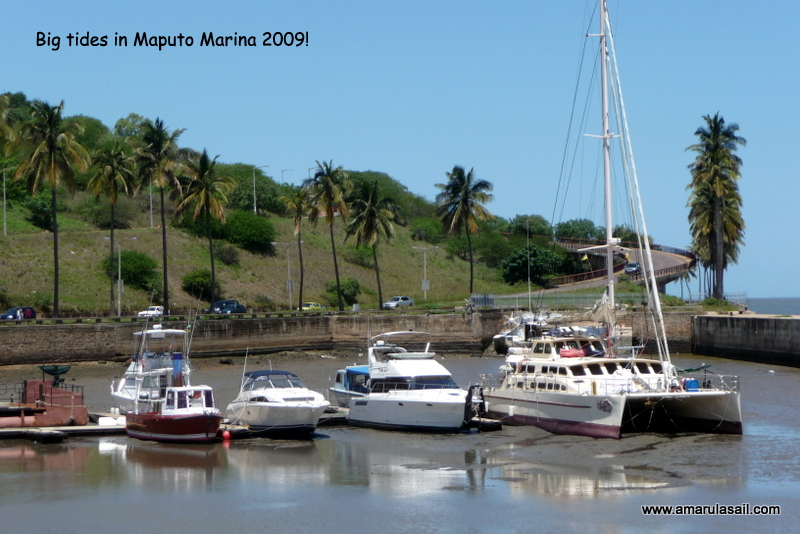
Eric (Captain - Australia) and Lynne (First Mate - England/Australia) began cruising in 2002 aboard Amarula, a 60' Crowther Catamaran hailing from Gibraltar that they build themselves.

They left Australia, cruising across the Indian Ocean to Tanzania. They stayed in Tanzania for 5 years doing charters and running a business. They visited countries along the African coast during that time. They left Tanzania for South Africa, eventually crossing the Atlantic to Brazil. They spent the next 4 years cruising up and down the Eastern Caribbean before sailing through Bonaire and Curacoa, and Columbia to Panama. After transiting the Panama Canal, they spent last season cruising across the Pacific to Fiji where they are currently.

They say: "We met in Dar es Salaam in 1993 where Eric was operating his prawn trawler (designed, built and owner operated) and Lynne went to teach at the International School of Tanganyika. Eric's dream had always been to build a yacht and sail around the world, to which Lynne responded "I'll be your crew!

We built our catamaran and launched her in July 2001 on the Clarence River, NSW, Australia. After a shake down cruise to Sydney for New Year & the fireworks, we set sail from Yamba, NSW in April 2002 around to Darwin, from where we began our circumnavigation in May 2002. We are still - very slowly - making our way around the world!"

You can learn more about their cruise on their website.

Having cruised both the Atlantic and the Pacific, how do they compare? 

We have cruised the Indian Ocean, the Atlantic and the Pacific. There is little comparison for me (Lynne), as the Indian Ocean was my first experience of an ocean crossing back in 2002. There were 5 of us onboard and we took 2 months from Darwin to Dar es Salaam, with a few short stops en route at Cocos Keeling, Chagos and Seychelles. We were on a mission to get back to Dar es Salaam, where we already had a few charter bookings lined up. But I LOVED being out on the open ocean, especially at night on my own in the wheelhouse or sitting out on deck enjoying the moon and the stars and complete serenity. We were fortunate with the weather! In fact, we motored miles north of our rhumbline looking for wind and at times just enjoyed floating at sea, swimming in the middle of the ocean thousands of miles away from anywhere.

We crossed the Atlantic from Walvis Bay, Namibia to Cabadelo, Brazil via a 6 day stopover in St. Helena in February/ March 2012. This time our only crew was our 2 Jack Russells, who did extremely well on their first ocean passage. We generally had reasonable winds and enjoyed a mostly downwind sail, thankfully avoiding the doldrums that a number of our fellow passage-makers 100 or so miles north of us lamented about daily on the morning radio net. We easily got into the groove of the passage and had no major dramas, but boy oh boy were the dogs happy when we finally made landfall in Brazil after 28 days at sea!

Meanwhile our Pacific crossing was easily the most challenging, perhaps because it is the most recent of our ocean crossings. We had an extra crew member, which especially helped with the night watches, but the first part of the sail towards the equator and the Galapagos was painfully slow. The grib files showed wind to the south of us and every time we started sailing towards it, it shifted further south. Remembering our Indian Ocean passage and the many hours of motoring, still failing to find the elusive wind, we spent some days just drifting and playing water frisbee with the dogs! As we struggled with either no wind or heavy squalls we were receiving emails from friends less than 100 miles south of us who were having a fantastic sail averaging 7 knots! Unfortunately, when we finally did get some wind the mainsheet block failed through crevice corrosion resulting in a ripped mainsail, then a few days later the block on our spinnaker snapped and our brand new spinnaker came tumbling down. This left us down to our 2 trusty headsails and we still had over 2000 miles to sail...... Add to this an almost complete lack of fish (4 in total in a 5 week passage!) and I can safely say we were all ready to set foot on land in the Marquesas!

Another thing we have noticed in the Pacific is that the weather forecasts have been invariably wrong and the winds have almost always been stronger than predicted, often from a completely different direction (see the answer below on danger)

Share a piece of cruising etiquette    

Maintain a good look out at all times and keep your radio on. Be ready to assist fellow cruisers and seafarers. We often came across fishermen as we cruised the Tanzania coastline who needed some kind of assistance, such as a tow due to broken outboard motors etc. On one occasion when we were heading to southern Tanzania for a bathymetric survey to study the reefs around Songo Songo island as part of the environmental impact study for the gas pipeline project, we stopped at Okuza island for a walk. We came across a huddled group of fishermen whose livelihood was catching and drying octopus. We soon discovered that they were stranded without water, as their supply boat hadn't shown up. As we had a watermaker onboard we offered to fill some jerry cans for them and immediately they came running over with at least 20x20 litre drums! We gave them over 200 litres of water and took one of them to the next island south where he was able to get further assistance. More recently, here in Fiji, a cruiser had run onto a reef and put out a Mayday call. We were about 5NM away at the time and changed course so we could assist.

What piece(s) of gear would you leave on the dock next time? Why? 

Because we built our catamaran for chartering we were talked into installing a dishwasher and a bar fridge, neither of which we ever used, so they became storage areas and we eventually gave them away in Africa and built in some large storage drawers instead. When we had a charter and wanted cold drinks we kept them in a cooler box on deck with ice blocks which we rotated from our freezer. As we had been based for a number of years in Tanzania prior to building the boat, we built Amarula as a stand-alone operation to operate as a charter vessel.

With the benefit of hindsight, what are the boat selection criteria you would use to purchase a boat for long term cruising?  

Eric: Max. 45'. Priority of importance: 2 oversize anchors with minimum 100 metres chain and good anchor winch plus extra rode, robust auto helm, fish finder with portable hand-held depth sounder (Hondex PS-7), plenty of solar and wind to run large fridge/ freezer, good sail wardrobe (including headsail, staysail, mainsail, code zero/ spinnaker), enclosed cockpit/ wheelhouse for comfortable cruising in all weather, good stowage, Hard bottom dinghy with mimimum 9.8HP for river and reef exploration trips.

What type of watch schedule do you normally use while offshore? 

With just 2 of us we tend to do 3 - 4 hour watches usually starting around 1900 - 2300 (Lynne), 2300 - 0300 (Eric), 0300 - 0600 (Lynne), 0600 ~ (Eric). On the few occasions where we have had extra crew on long passages we do 3 hour watches.

Have you ever felt in danger and if so, what was the source?  

On passage we have generally picked our weather windows well and been fortunate to have some excellent downwind runs. On a couple of occasions we have run into unpleasant squalls of 40+ knots or so. For example, despite all the forecasts showing light winds from the NW we hit 40 knot squalls from the SE when we were heading from the Marquesas to the Tuamotus in French Polynesia and had to heave to for a few hours - our first time ever. Back in 2002 we did a marine research charter to Aldabra and Cosmoledo islands in the Seychelles and we found ourselves sailing/ motoring head on into the first named cyclone to form above 10 degrees south and we took a battering. Unfortunately, we didn't have the luxury of being in a position to plan this passage, as this was a commercial charter that we had committed to. It also demonstrates the importance of timing your passages.

As for other kinds of dangers, when we were at anchor in Taganga Bay, Colombia, in November 2015, we were unfortunately boarded by armed pirates and robbed at gun & knife point. Meanwhile, we spent many years cruising up and down the coast of East Africa without any unpleasant incidents and in fact we had some of our most memorable experiences in that region.

How much does cruising cost?    

Again, this is a question that every cruiser would have a different answer for. Some people do it on an absolute shoe string budget never eating or drinking ashore at bars and restaurants, never taking tours or hiring cars or staying in marinas, others go all out and use cruising as a way to travel from country to country and base there, then experience just about everything that country has to offer including staying in marinas, going on shore based excursions etc. When we closed off our business in Tanzania and set off cruising we had a very healthy stock market portfolio and felt ready to take on the world and see and experience each new country to the max. In our first couple of years cruising during the GFC, we lost a huge portion of our portfolio and have been shoestring cruisers ever since! However we have had many incredible experiences and have met some fantastic people.

What is a cruising tip or a trick you learned along the way?    

Go with the wind. Relax and enjoy, rather than try to rush to meet schedules and be prepared to change your plans. We also really enjoy exploring anchorages off the beaten track and especially meeting and getting to know local people.

In your own experience and your experience meeting other cruisers, what are the common reasons people stop cruising?    

There are so many reasons. Probably the most common being age/ health/ mobility issues, finances, time for a new challenge, end of a circumnavigation and grandchildren coming along! One thing we have noticed is that many cruisers go on to become land cruisers. Perhaps we will in the not too distant future...... But one idea that we are tossing around, now that we're almost done with cruising and much closer to home is to offer 'educational retreats' onboard for wannabe/ soon to be offshore cruisers - a kind of 'try before you buy' situation where people can come and test out the lifestyle, ask questions, learn the ropes so to speak - we'd love to hear from anyone who may be keen to try something like this and we can be contacted via our website.

What question do you wish I would have asked you besides the ones I've asked you and how would you answer it?

Eric: Would you circumnavigate again? Yes!

Lynne: Would you like to continue living this lifestyle? Absolutely! 

07 August 2017

10 Questions for Journey

Wayne Seitz & Dana Greyson cruised from 2012 until 2017 aboard SV Journey, a 1977 Pearson 365 ketch, hailing from Portland, OR, USA (though Journey's never been there).

They bought Journey in St. Lucia and sailed up the Caribbean chain, back to Florida. From there they spent time in the Bahamas before returning to Florida, before continuing on through to the Panama Canal. They crossed the Pacific to New Zealand, then spent another season in the islands before finishing their cruise in Australia where they sold their boat.

They say: "We do see ourselves returning to cruising down the road, though not likely making a trans-Pacific crossing. Wayne, a savvy mechanic, is still a frequent contributor to the Pearson owners forum.  We're incredibly humbled by and grateful to the many Pearson owners generosity to us.  I've published a number of Cruising World shorts, the most recent in June/July '17, a heartwarming story about an island dog in New Caledonia supported by cruisers via Cat Impi's GoFundMe campaign."

You can learn more about their cruise on their blog.

With the benefit of hindsight, what are the boat selection criteria you would use to purchase a boat for long term cruising?

For the money, we still felt we did well with our Pearson 365; safety -- a solid blue water boat on a budget was our driving criteria.  Journey definitely delivered.  With a bigger budget, a boat with a "man cave" and a better alternative to our v-berth for sleeping would've been excellent.  We were very tempted partway into our cruising to switch to a Manta 37 catamaran for its more comfortable layout, but decided it was outside our budget and felt more confident we would recoup our buying price more easily with a lower cost boat, like our Pearson.  We'd still have preferred a cutter rig over a ketch.

Bottom line:  better speed and more comfort would've made long passages less stressful.

What (if anything) do you wish someone had told you before you started cruising?

Get new sails -- at least a new mainsail -- before you go if you plan to do substantial cruising, even if what you have is in okay condition.  We figure we spent more money fixing what what we had than we would have for new sails, and we would've sailed much more efficiently, too.

While SSBs are slowly being replaced by satellite technology, we wish we had a working SSB setup not only for safety, but also to be more connected with cruiser nets, especially for the Pacific Puddle Jump (PPJ)

Buying your boat outside the US offers greater than expected challenges when it comes to getting your boat cruise-ready (especially when it comes to getting the parts you need affordably - or at all). After we sailed to the US, we left with a LOT of spares for the rest of our journey and they served us well.

We actually did this - worked at West Marine part time to enjoy the awesome employee discount on our boat gear.  We thanked West Marine every day for the gear we'd never have had the budget to buy full retail.  We also got fabulous advice from Milltown Sailing club (in Everett WA), Wendy Hinman ("Tightwads on the Loose" and "Sea Trials" author) and Seattle Women in Boating.  Connecting with the sailing/boating community (experienced folks who are not connected with selling you stuff) and the Pearson forum was invaluable.  We also crewed on three boats before we left, which taught us some good lessons.  Wayne read just about everything he could get his hands on online about cruising (including Interview with a Cruiser).

What are some of your favorite pieces of gear on your boat and why?

Our oversized Rocna anchor.  We got it after our first season and slept much better after that.  The only time we dragged once we got the 42lb  Rocna anchor was because our windlass broke so we scarcely put down any chain.

CPT autopilot.  Not fancy or integrated but incredibly more robust than other more popular wheel pilots.  Incredible customer service, too.

An illegal propane instant-on hot water heater for a darned nice shower for a boat as relatively small as ours.  Even in the tropics a hot shower just makes you feel more human afterward.

Iridium Go! wifi hotspot with Predict Wind. Getting accurate relatively forecasts in middle of the ocean was pretty awesome, as was keeping in touch via texting from it (the latter really helped me feel less isolated on long passages like the 32 days it took us to go from Galapagos to the French Marquesas).

Soda Stream soda machine- great way to keep drinking water interesting without having all the extra soda bottles or lugging them shore-to-ship.

How much does cruising cost?

We paid $30,000 cash for our sturdy 1977 Pearson 365 sailboat.  We chose to aim for a fairly lean cruising budget of $1500 month for everything - from boat repair, to food, customs and immigration, entertainment  -- everything.  In places like Fiji we had no problem coming in under budget. However extensive boat maintenance and repairs in New Zealand and overall cost of living in Australia put us over budget in those areas.  We also chose to not insure our boat or carry health insurance, which we knew was risky but also prompted us to take less risks.  We also trusted fate and were willing to pay out of pocket for any medical needs.  We rarely stayed in marinas.  On the backside, after all our import and pre-sale and commission costs (~$10K USD), we sold our boat for a net of ~$46K USD. That net included putting in some extra work to save 5% duty on the valuation price (for a US-built boat under the thanks to the US Trade Act Agreement) and selling off boat accessories (ex. Iridium Go!, life raft, backup autopilot, etc. for $3.5K) not required by Journey's new owner.  Our boat sale was not really a $16K profit!  We spent a significant amount of money on maintenance, repairs (like this one) and gear well beyond $16K, and we were pretty frugal.

What do you dislike about cruising that surprised you? 

Too many long, uncomfortable passages -- and relatively speaking ours were fairly benign.  Thanks to doldrums, contrary winds (often despite what was forecast), currents that behaved differently than anticipated, torn sails, etc. most passages took us longer than expected.  Having a genuinely pleasant sail, however, was exceptionally rare for us.  Also, with the two of us as sole crew, we missed quality time together while on long passages.  There's no sleeping together when one of you always has to be on watch.

What is your most common sail combination on passage? 

Jib only, followed by main and jib.  We had a mizzen which we rarely used.  Our autopilot was very prone to weather helm, which led us to a very cautious approach on how much sail we put up.

Was there anywhere you visited that you thought was overrated (not as good as you had heard)? 

Panama's official check-in rudeness and cost soured us when we first came to the country to a point it was difficult to overcome (though Isla Contadora, our last Panama stop was a great place to relax).

Bora Bora's over-commercialization turned us off

Vanuatu's cruise-shippy Efate was also an area where it seemed little could be enjoyed for free.

Was there anywhere you visited that you thought was underrated (better than you had heard)?  

New Caledonia was a pleasant surprise, refreshing us after we'd felt somewhat burned out.  The sailing was easy, anchorages plentiful and varied, with lots of well-maintained hiking trails and islands with great snorkeling.  We appreciate the ease of checking in and out of most French territories and New Caledonia was no exception.

Spanish Virgins were charming, far more interesting and less commercial ashore than BVIs or USVIs

Maupiti was a sweet place, unplanned to end our stay in French Polynesia with our favorite lookout point view.  We were fortunate to catch a good weather window in; we saw how nasty its narrow reef entrance can get the day after we arrived.

Share a piece of cruising etiquette  

When you socialize with other cruisers in an anchorage, consider casting your net wider to invite the whole anchorage.  Make a point of at least saying "hello" and introducing yourself to other cruisers in the anchorage, even if your default is to just stick with the folks you're buddy-boating with.  You never know just how much being inclusive is appreciated, or how much being left out can sting.

In your own experience and your experience meeting other cruisers, what are the common reasons people stop cruising?

In our case, we stuck to our plan, a budget enough to cover 5 years of cruising, and we were reticent to tackle the sailing challenges between Australia and the US to finish a circumnavigation.  We completed our goal; even if ours was halfway around the world (others stop when they circle the whole blue marble).  Missing our friends, but especially parents, especially those who don't travel and are in their late 80s and 90s, also prompted our return home -- all the more so as our budget didn't include trips home to visit friends and family. We've observed cruising parents needing to usher their children into college are one call to end cruising.  Health issues, among cruisers themselves, or with other family members are prime reasons to stop cruising.  An empty cruising kitty is often easier to replenish with a long break from cruising, and a return to more traditional work for a while.

Particularly for frugal cruisers like us, at some point the clarion call of a queen-sized bed you don't whack your head on when you sit up and endless hot showers is darned compelling.

What question do you wish I would have asked you besides the ones I've asked you and how would you answer it?  

What scared you?  (specifically, we were often asked about "pirates" and "storms" as well as other "I wouldn't go because" questions....)

We never encountered pirates, because they're not that common and Noonsite offers excellent information on areas to avoid.  The only time we ever got "boarded" was by a confused homeless fellow in Jacksonville FL; he left without incident.

We never encountered sustained winds of over 30 knots or sustained waves over 4 meters (and >1-2 meters were most common) - boring but true

What scared us the most was our last long passage - two seriously nasty lightening storms coming into Bundaberg Australia. The first lasted about 2 hours, followed later by a shorter lightening storm in our last few miles in.  Both times, we dropped our sails, turned off our electronics and put all we could in our "Faraday cage" (oven) in anti-stat bags.  We didn't get hit, but sure thought we would.
Overall, we were incredibly lucky as well as well prepared.  We also can't help but wonder how many other boats cruise relatively unscathed... it just doesn't make as interesting "press" but all those scary stories sure do discourage a lot of folks from ever considering even getting into a boat, much less distance cruising.

10 October 2011

10 Questions for Silas Crosby

sc1 Steve Millar on Silas Crosby completed a self-interview in the Newly Salted style. You can read the original interview here or the perspective of another crew member, his niece Meredith, in her interview.
------------------------
At age 56, I am in the middle of another long (metaphorical) cruise.

I started sailing at age 9 just south of Vancouver in a 9′ dinghy, then, in high I school built a 17′ catamaran and cruised the Gulf Islands of BC. My parents didn’t sail or know anything about it.

After several years of race boat crewing, I helped sail a 40′ cutter from Auckland to Vancouver over 6 months in 1974. A good taste of the South Pacific. After a hiatus of about 6 or 7 years of not much sailing, my wife and I bought a Spencer 35 named ‘Cor Leonis’ in 1986. We did an initial trip to Haida Gwaii, then took off again for a classic 3 year trip to Mexico and on to New Zealand , where our son was born.

Returning to BC via Samoa and Hawaii, in 1991, we settled in the Comox Valley, sold the Spencer 35 , had another child , and built the Brent Swain 36 steel twin-keeler, ‘Silas Crosby’ . The construction was a joint project with my brother John , and took 2 yrs and 4 months. After launching in about 1994 we cruised far and wide on the BC coast.

In 2001 the 4 of us did a north Pacific triangle cruise over a year, to Mexico, Hawaii, and home to BC again.

About a year ago in Sept 2010, we set off again to try to fulfill a long held dream., to explore the cruising grounds of the channels and islands of southern Chile and Patagonia. This time the crew was Steve (56) , my brother  (69), and niece Meredith (25). John sailed with us as far as La Paz in the Sea of Cortez before returning to Vancouver.

The idea of sailing from cold water in BC to colder water in southern Chile did not appeal to my wife Barb, so she elected to stay home and live the good life, untroubled by boat fanatics.

We are now in Valdivia, Chile, reaching the end of the austral winter. We arrived about 4 months ago via Easter Island, Galapagos, and Mexico.In the next week or two we plan to continue south eventually reaching Puerto Williams on Isla Navarino sometime around March 2012.

Tell me your favorite things about your boat.
Steel hull , twin keels , continuous tube liferails.  We pay a little bit for the twin keels when hard on the wind , but we still had a good passage from Galapagos to Easter Island with the wind forward of the beam the whole way.

The solid liferails are very sensible. I think only Amel installs them as standard on a production boat. Recommended safety item.

Tell me your least favorite thing about your boat.
Concern about rust. Not too big a problem in the first 17 years , but one does have to pay attention, despite flame-spraying during construction.

I would have loved to be able to justify the expense of a folding or feathering prop. Probably good for 1/2 knot on the wind , maybe more in light winds. The right deal has never come up in a 17 x 15″ 3- blade prop.
Of course, we need a 50′ boat to live aboard in rainy weather but only a 36′ boat to sail and pay for.

sc2 How often have you faced bad weather in your cruising? How bad?
Our worst weather was the last week coming in to Chile. We were really psyched up to get some bad weather, and would have been surprised had we not. So the two fronts that passed over us were uncomfortable, but OK.

Until that time I had used the storm jib and trysail only once before to slow down in strong winds coming in to New Zealand in 1987.

Can you think of a sailing tip (e.g., sail trim, sail combination) specific to offshore passages (e.g., related to swells)?  
This is interesting. We really use our whisker pole a lot, and try to sail wing and wing as much as possible because it is so comfortable, steady, and just generally easy on our boat.  When we arrived in Valdivia we have found several cruising boats that don’t even own a whisker pole and make their way downwind by jibing. These are all boats that have sailed thousands and thousands of miles to get here.

Another interesting thing we’ve discovered is how many crews do not keep a watch system. Many of the solo sailors just go to bed and get up whenever. Also some of the couples both turn in at bedtime and get up for breakfast. Some have AIS and radar watches but some don’t.

We tend to generally enjoy the night watches, sort of for private time.

Over the time that you have been cruising, has the world of cruising changed? 
Starting in 1974 we navigated the old, scary , approximate way. The last week coming in to Cape Scott with an RDF and DR was sketchy. GPS is excellent .We have occasionally dug out the sextant, mostly to look at it in wonder, but we don’t push the ‘off’ button on the GPS.  But really, the fundamentals have not changed at all. The people are still the same, great and friendly and helpful. The wilderness areas are still wild.
People still run up on reefs

Navigation is a lot easier, and much less stressful. That’s good.

Engines are more reliable. Sails are stronger and more durable.

What piece(s) of gear would you leave on the dock next time? Why?
We have a 10 1/2 foot Portabote, a 7 1/2 foot inflatable , two 13′ solid plastic kayaks with sprayskirts, drysuits etc, and a 2 hp outboard. We haven’t actually used either of the dinghies since sometime in Mexico. It is a lot of gear to be hauling around. I expect we will need the inflatable in Patagonia for shoreline etc.

What do you miss about living on land?
My family.

While cruising, what do you do about health & boat insurance, medical issues, banking and mail delivery?
DAN emergency health insurance and 2 yr coverage from BC government health system. I went to medical school to prepare for cruising , probably overkill (!) but it is helpful. I was offered a pre-emptive appendectomy , but declined , and brought injectable antibiotics instead.

Banking , taken care of by Herself at Home.

Mail : what mail?

Why did you decide to cruise?
Reading Slocum , then Chichester as a 10 or 12 year old.

What did you do to make your dream a reality? 
Became Obsessive.

Finish this sentence. “Generally when I am provisioning…”
I think that food (any food) is important. Also I am associated with experts in the form of Barb and Meredith.

How do you fund your cruise?
Savings.

Entering Caleta Hassler, Isla San Martin Are you attracted more to sailing itself or cruising-as-travel and has that changed over time? 
The romance of voyaging under sail in a small capable vessel to interesting and far-off lands has not faded for me in the least. Miles Smeeton was the first writer that conveyed that to me. It is the travel across oceans under sail. Sailing is important.

Where was your favorite place to visit and why?
As a general lesson, for me, when the ‘Cruising Blues’ set in, it is time to leave town. It happens more often, but not exclusively, in the cities.

I have been back to the Baja side 3 times and around Vancouver Island 6 times, so those must be my favorites.

What are some of your favorite pieces of gear on your boat and why?
After several voyages without an HF transmitter on board , I am really enjoying blabbing on the SSB and Ham nets , and on informal scheds. I find that there is still lots of time for watching the birds , the waves, and the insides of my eyelids. The 2 x 85 watt solar panels are plenty to power the radio and the little Engel fridge(also a first for us)

The crude windvane, built to an old design is invaluable.

What is the next piece of gear you would add to your boat if it were free?
Fluency in Spanish. It isn’t free, though. I has cost me many, many hours to get to the early intermediate stage.

What is a tip or a trick you have picked up along the way?
Mast Up and Water Outside. Hot tips.

How much does cruising cost?  
$17,345.43 per year, plus or minus, depending on beer.

29 September 2011

10 Questions for Gallivanter

Kirk, Catherine & Stuart began cruising in 1994. They have cruised in two vessels since that time: Polly Brooks, a Worldcruiser Pilothouse 37 and Gallivanter, a Hylas 47 they turned into a 49 by adding a new style transom. They started in Hawaii and sailed west on an "Orange Peel" course across four oceans. They have yet to cross their outbound track in 40,0000nm. Kirk’s former career involved manned submersibles.

What are some of your favorite pieces of gear on your boat and why?

Anchor Windlass, chart plotter, autopilot - like having a strong crew (physically & mentally) who are always eager to help, don't eat much, get in the way or complain.

What is your biggest lesson learned?

Make your own choices & decisions - avoid the "Pack Mentality".

Where was your favorite place to visit and why?

Caribbean, Fiji, SE Asia, Turkey, Malta, Spain - Interesting cultures, affordable, availability of services & supplies.

What do you think is a common cruising myth?

That it's always easy and cocktails are served at sunset every evening.

In your experience, how much does cruising cost?

It costs everything you've got.

How would you recommend that someone prepares to cruise?

Go now. One can never be fully prepared.

Describe a positive experience you have had with local people somewhere you have visited.

STARGAZING with traditional navigators on the beach of an uninhabited atoll in the Caroline Islands. Dancing with savages in Papua New Guinea.

With the benefit of hindsight, what are the boat selection criteria you would use to purchase a boat for long term cruising?

Choose a strong boat purposely built & designed by a reputable team. One-off racing boats do not necessarily make for a comfortable cruising boat.

What is difficult for the parents of cruising children and what is difficult for the children themselves?

Kids add another level of enjoyment. I have found no difficulty added when our son was born and joined the crew. Lego is his one best entertainment.

What question do you wish I would have asked you besides the ones I've asked you and how would you answer it?

What has been the hardest part of this lifestyle?

Having to learn how to say "Goodbye" in so many languages.

12 September 2011

10 Questions for Alianna

alianna2 Sim and Rosie Hoggarth began cruising in June 2004 aboard Alianna, a Corbin 39 hailing from Falmouth, United Kingdom. They bought Alianna in Antigua and sailed the loop, down the Caribbean chain, across to South America, up Central America and North American as far as Washington DC and back down the Bahamas to the East Caribbean. You can learn more about their journey on their website.

What (if anything) do you wish someone had told you before you started cruising?
I had very limited sailing experience but my husband had been sailing for years.  I had complete faith in him and everything we learnt we learnt together.  Ignorance is bliss they say and we have enjoyed the whole learning experience.  I don't think there is anything we wished someone had told us before we got here, otherwise we might never have got here.

Is there something you wish you had bought or installed before starting cruising?
We are a pretty basic sailing boat - we have all the necessary safety and navigational equipment but we don't have radar and I have always felt that it would help when we are on passage to check which way storm heads are moving.  We have managed 7 years without a water maker and other items that some cruisers feel essential - its all a matter of personal comfort.  Sim wishes that we had built a bigger frame to house more solar panels, we physically can't carry any more, while there is always a need for more power.

What mistakes did you make in your first year of cruising?
We were very very cautious the first year of cruising, getting to know the boat and living together in a small space.  I don't think that we made any major mistakes, except in perhaps spending money on items thinking we were going to sail around the world that we now don't need - maybe we shouldn't have been so hasty in that respect.

What is the next piece of gear you would add to your boat if it were free and why?
That's a tough one, I would be torn between a radar for reasons explained above, new sails as ours are very old and baggy or a freezer for ice at cocktail hour - can I have them all?  Sim says an extra 10ft but I don't think it matters how big your boat is you will always need more space for something. If an extra 10ft is unrealistic he would like furling gear for the inner staysail as at the moment it sits on deck and hardly ever gets used.

What is something you think potential cruisers are afraid about that they shouldn't fear?
We both agree that the fear the unknown whether it be weather related, country related or boat related most of the time its never as bad as it seems and the cruising community is a tight knit of people who are always willing to help.

And what is something potential cruisers don't worry about that perhaps they should?
Obviously that same can be said if you don't have any concerns about the above either. Have some respect for everything from the sea, to your boat and the countries you are visiting. Also you need to be able to do a lot of your own maintenance, everyone has to call in some help sometime but unless you have bottomless pockets the ability to do the majority of your own maintenance makes the lifestyle much more affordable to people who are on a budget.

alianna In your experience, how much does cruising cost?
Cruising can cost as little or as much as you want it to.  We consider ourselves to be at the lower end of the scale - we try to live on a US$1000 a month with additional expenses of about $5000 per annum accounting for overspend or haulouts or insurance etc.  We know people that live on less and many that live on more.

How did you (or did you) gain offshore experience prior to leaving?
I had very little experience sailing on a yachts although I had clocked up a few sea miles of off shore sailing on Tall Ships as deck hand and watch leader, I joined a dinghy club before we left and took my day skipper course.  Sim has been sailing his whole life, racing Hobie cats, working on the Tallships as a marine engineer and doing deliveries.  He had his own 20ft sailboat in Cornwall and an RYA Off Shore yachtmaster certificate.

What is a tip or a trick you have picked up along the way?
This is not a tip or trick, its just sensible.  Get the best and biggest anchor you can afford. Buy good quality.  You will have many peaceful nights if you have confidence in your ground tackle.

Where was your favourite place to visit and why?
I don't think I could choose a favourite place and why - The reason we love cruising is that each place tickles a different spot, that's the beauty of being able to move your whole home from one place to another.  But in general terms the East Caribbean offers the easiest sailing with short hops between islands and beautiful comfortable anchorages for most of the time. I do love the Western Caribbean for its different cultures and life styles.

What question do you wish I would have asked you besides the ones I've asked you and how would you answer it?

How do you decide when you are ready to go cruising? 

Sim felt that at the time he was young enough to go away cruising for 5 years and still be able to get work when he returned. Rather then wait until has was at retirement age.  I was at a time when I was ready for a change of lifestyle.  Once we made the decision to go sailing we sold up and shipped out within 6 months. Best decision we ever made.

25 July 2011

10 Questions for Reach

reach2 Mark Cole and Michele Kelly began cruising in 2008 aboard Reach, a Manta 40 catamaran hailing from Mystic, Connecticut, USA. They traveled from the East Coast US to the Bahamas, Eastern Caribbean, Venezuela, ABC islands, Columbia, and now San Blas Panama. Readers can learn more about them on their website.

What (if anything) do you wish someone had told you before you started cruising?
Michele:  Be true to yourself.  Before cruising, we soaked up as much information as we could from all available resources.  Our friends and seasoned cruisers delighted us with their tales from the high seas, but wisely told us that ultimately, you won't know what cruising is like until you're actually out there.  Not only did this prove true, but we also learned that to be happy you have to figure out what works best for yourselves.   It helps when the boat feels like home.  There is no right or wrong boat or way to cruise since it is about personal choices and it always surprises me when people are adamant otherwise.  We try to apply this basic principle to our choices in boat type, primary navigation, boat systems and life in general, which for us includes keeping a good sense of humor, not taking ourselves too seriously and enjoying what we do in both the exciting and the mundane.

Mark: It is in my nature to gather data and to group, distill and analyze it before making decisions (I’m a scientist), so I spent a lot of time asking advice from other cruisers, mucking through the various discussion boards, reading all books I could find, etc.  So far, I haven’t found that there some particular fact or circumstance I should  have known before setting out, but there were three things I was told that I think all potential cruisers should hear.

The first is that everyone I talked to, without exception, who retired at the usual age and then went cruising, told me that they wished they had gone cruising when they were younger.  Two reasons were cited: that certain aspects or intensities of cruising slowly close down as one ages, and that many of those things one stayed shoreside working toward like a “proper” retirement package, new cars, bigger houses, more entertainment, etc become so unimportant and trivial when looked back upon from a cruising lifestyle.  No one complained that cruising wasn’t fulfilling, fun or was a bad decision - simply that they wished they had gone when they were younger.  Intellectually, we took this to heart and it became the driving mantra to go cruising for us.  Yes, this is an old saw that is repeated in many books and discussion boards; however, it took being out cruising full time until we truly understood what it means and why.  Potential cruisers will need to intellectualize it, like we did, while having faith that it is true and that they will discover why only after they have been out cruising.

The second thing was not so much a piece of advice, but rather a condensation and synthesis of discussions with cruisers.  When talking to cruisers from a wide variety of backgrounds, from boats spanning 60’s pocket cruisers to expensive large yachts, from personal fortunes ranging from a few dollars to many millions, from those staying close to home to those ranging the globe, all of them described the exact same experiences of meeting people and cultures, living by one’s own ethos and standards, enjoying the scenery, fixing things that break, sharing stories of bad passages, reveling in the sublimeness of good passages - in essence, all these cruising people were the same.  No one out here debates any of the pedantic stuff littering the bulletin boards about what makes a “proper” cruising boat and a “real” cruiser.  It just doesn’t matter out here - we are all seeing the same things and having the same experiences.

Related to this is the third piece of advice - again, an old saw that is only really appreciated once you make the break and see it from the other side - which is “Go Now”.  We were told that our boat would never be “ready”, that there would always be shore-side “commitments”, “obligations” and “emergencies” that would just take “one more year”, that our retirement plans would never be “secure”, that our families would never become “more comfortable” about our plans, that our house would never be “ready” to sell, that our jobs would easily go on without us “winding them up for transfer” - essentially, that the list of things we thought were influencing our departure could easily be wrapped in “quotes” and tossed away.  In the end, the only piece of sticky tape remaining for us (really, me - Michele was innocent in this) was the belief that we could sell our house for a bit more money if we waited a little longer.  Luckily, our good friends (and long-time cruisers) stepped in and convinced us (me) that the difference we were holding out for would not begin to cover the costs of the missed experiences of the first year out, and that we (I) would forget about that “lost” money immediately.  Today, I have forgotten the price at which we sold our house, and what amount we wanted to hold out for.

I once read a letter to a sailing magazine describing a couple who worked hard while waiting to retire, purchased the boat of their dreams and spent two years completely refitting it.  While backing out of their slip on the dreamed of day, waving good-bye to all their friends as they departed on their long-awaited and well-deserved cruising lifestyle, the husband had a fatal heart attack.  The wife, writing the letter, described how she wished they hadn’t waited so long and urged everyone considering cruising to “go now”.   I have never forgotten that letter.  The first point about “Go Young”, coupled with “Go Now”, really lit a fire under us to wrap things up and go.

When we left in 2008, Mark was 45 and Michele was 39.  Our families understood, our house sold easily, our retirement plan is what it is, and our jobs didn’t even hiccup without us.  Our boat is still not “ready”, but we haven’t noticed that for a couple of years now.  After three years cruising, Mark is currently 35 and Michele is 29.

No one told us we would get younger out here.

Is there something you wish you had bought or installed before starting cruising?
Michele:   During summer seasons, we coastal sailed on "Reach" before selling our house to live aboard and go cruising full time.  One system that had never been commissioned until a few months out was the watermaker.  While it is possible to take on water at marinas in the US or Eastern Caribbean, it was another chore and we had to watch usage.  We live at anchor 98% of the time and the watermaker gives us complete independence.  Water is not as abundant in some other countries we've visited; for example, there are little to no water sources in some of our favorite places, like the southern Bahamas, Venezuelan out islands and the San Blas.  I prefer fresh water for showers, dishes and laundry as opposed to salt water, since things like hair and clothes don't dry out from residual salt.  For us, this is a critical piece of gear.

Mark: AIS (Automatic Identification System).  These existed before we left cruising, but with radar, good charts, a radio and many years of navigation experience around ships and shipping, I just couldn’t see the point of wasting $189 for an AIS receiver.  After 1.5 years out, we installed an AIS receiver.  Wow.  It is one of the best things we have put on the boat and certainly THE best thing under $200.  We don’t miss having a transponder model or a full bells and whistles system, although others may want them.  The simple receiver interfaces easily to the chart plotter and shows all commercial ships and information (and any recreational boats with a transponder).  The difference in navigation ease and information over radar and VHF is tremendous - particularly during night passages.

Also, a water catchment system.  It doesn’t have to be fancy.  After 1.5 years, we added some inexpensive gutters to our bimini and lead the water through a filter before the tanks.  No sense letting all that free water go to waste.

Our boat was very well equipped when we bought it, and has full navigation electronics, radar, autopilot, watermaker, diesel generator, inverter/charger, air conditioning, SSB/HAM radios, a large solar panel installation, a good refrigeration/freezer system, large RIB dinghy with 15hp outboard, etc.  What we consider essential for our personal cruising lifestyle is the GPS, autopilot, watermaker, SSB, solar, reefer/freezer, inverter (just large enough to run small appliances off and charge computers) and a good wifi system.  One must have some type of dinghy and we personally would not want to be without a RIB with an outboard large enough to plane with two people and a healthy amount of cargo.  If we didn’t have the diesel generator, I would get a portable Honda generator.  If we didn’t have the room for solar, I would get a wind generator.  I would consider the radar essential only if cruising in areas where fog is common.  The watermaker is not essential if your cruising grounds are in areas with a lot of marinas or other water supplies.  For us, it is essential since we have been cruising in areas such as the Bahamas, where you have to jug water (this gets old very quickly) and the San Blas, where you have very limited access to sporadic or questionable supplies.  Air conditioning is not essential and wouldn’t be on our boat if it wasn’t already installed.  Regardless of lifestyle and comfort choices, I would have at a minimum a good, trustworthy autopilot/self steering and a GPS.
 
What mistakes did you make in your first year of cruising?
Michele:  We have each bottomed out in shallow depths in soft sand or mud while at the helm.  That was the result of exploring off the beaten path so it's usually worth it, less a little bottom paint.  It's not the result we'd want in rocky or coral areas, however.  Also, I was fairly radio shy at first on the VHF, but have mostly gotten over it as this is our primary means of communication.

Mark: Fortunately, we didn’t make any big mistakes - certainly nothing that cost us money or set back our cruising plans.  While not really a single “mistake”, a couple of passages in snotty weather did teach us to wait for good weather windows and not push on to a schedule.  It also taught us that our boat would do just fine in those conditions.

What is the next  piece of gear you would add to your boat if it were free and why?
Michele:  OceanAir hatch screens.  At anchor in a nice breeze you typically don't need screens, but when you do find yourself in a buggy place you really need it!  We were trapped inside by swarms of mosquitos for several becalmed days at the ironically named "Dos Mosquises" islands.  We have removable hatch screens that when not in use, just lay around various cabins in the boat and get in the way.  It would be a luxury to have sliding hatch screens, but they are very pricy and we have 6 hatches.

Mark: Possibly a wind generator.  It would be a mounting challenge for us, but we still might add one someday.  If gear is being handed out, I would replace our 6 gal/hr DC watermaker with a larger output (~20-30 gal/hr) AC powered one that could also be run off the inverter when a charging source is present.  Water is such a differential out here in terms of lifestyle, particularly in the tropics where a good rinse after swimming and a nice shower before bed is in the realm of necessity.  To be able to wash down the boat after a salty passage is not a luxury, but indispensable maintenance.  Even with a large solar installation, there is a limit to how much we can run our watermaker and still maintain the batteries.  DC watermakers really only work to spec when the battery voltages are in the charging range, so we end up running it when motoring or during the height of sunny days, or running the generator during less sunny days.  When motoring or running the generator, we are providing more energy than the watermaker consumes.  It would make more sense to run a larger output one during these times and fill the tanks in a shorter period.  If we didn’t have a generator, I would get a portable Honda for running the watermaker.

What is something you think potential cruisers are afraid about that they shouldn't fear? And what is something potential cruisers don't worry about that perhaps they should?
Michele:  Is it scary? Some potential cruisers worry about multi-day passage-making for various reasons.  Well-planned and executed passages (clearly an understatement) can be one of the most pleasant times spent on your boat, traveling along with your entire home in peace and solitude.  A truly good passage lets your mind travel to new places as well.  We get into a focused "zone" when passage-making and become relaxed and well-rested, keeping low stress no matter what the conditions.  By running 3-hour watches from 8PM-8AM and catching naps during the day, we sometimes get more total sleep on passage than normal.  Passages are always one of our favorite experiences on "Reach".

To worry or not? It's easy to relate dinghy travel with as much as certainty as driving a car on the road, until something goes wrong (or even worse, drifts away or is stolen).  It's important to be aware of your environment and think about what you would do if something went wrong; for example, if your prop spins out when you are miles away from your boat as happened to us.  Fortunately, it still got us back to the boat at idle speed.  I find myself always double checking things in our dinghy to be prepared for excursions with a handheld VHF radio, sufficient gas, spare prop and a good anchor.  If you are alone in an isolated region, that VHF probably won't do you any good anyway, but oars, a bottle of water or small ditch bag might.

Yes, Worry. Most of us are aware of incidents of violent crime targeting cruisers.  We've made decisions not to travel in questionable areas without a "buddy boat" nor in some areas all together.  For us, it just isn't worth the risk, independent of others' experiences or attractions.  On a weekend when we were considering making a particular trip alone, another single boat taking this route was boarded and robbed and it certainly hit home that this could have been us.

Mark: Almost universally, potential cruisers (any many actual cruisers) are afraid of storms and sailing in bad weather - particularly at night.  I think this fear actually ends some cruising plans before they are implemented, and there are cruisers out here who travel only by daytime hops in calm weather because they still fear it.  And bad weather sucks.  We hate it and avoid it as much as possible and experience fear when we are caught in it.  It is OK to be afraid as long as you confront your fear for what it is, understand that it is natural and unavoidable, and go on with your plans knowing that you will meet it again.  So while it is OK to fear storms, you shouldn’t let that fear control you or your plans.  For most cruising grounds, getting caught out in a storm is remarkably rare unless you are foolish enough to have an unyielding schedule or not learn to understand weather patterns.

There are two things potential cruisers don’t worry about that will shut down their cruising plans immediately: Schedules and “Knowing Thyself”.

Schedules are a killer.  While they are completely normal and expected on land, out cruising they will break you, make you miserable, lead you into taking your boat out when and where it doesn’t belong and, in general, completely muck up your life, if not actually damage you or your boat.  Unbelievably, we have met new cruisers who have shown us DETAILED schedules for the next TWO YEARS of their cruising.  And I mean details like: Jan 4 - Port A, Jan 6 - Port B ... for the next two years!  One was traveling from the Chesapeake to the Caribbean with scheduled plans for every single day and passage  times and dates for the whole year like it was a package vacation with airlines and trains!  It is OK to have general plans, but if you are a potential cruiser with a detailed schedule, tear it up now before you get into trouble.  If you are the type of person who compulsively needs to have detailed schedules, you are not going to make it as a cruiser.

Know Thyself: it is an ancient piece of advice, but advice that shore life rarely requires one to learn.  Out cruising, however, not recognizing or understanding your personal needs, desires and requirements will end your cruising lifestyle.  We can recognize these cruisers within 5 minutes after being introduced.  It is that obvious to everyone except them.  By this I mean if you require fancy restaurants and fine entertainment and think you can fulfill this out cruising, you won’t make it.  If you are being torn away crying from your house that means the world to you and think the boat will be a substitute, you aren’t going to make it.  If you have grandchildren that you must spend a lot of time with and spend most of your cruising days pining for them, you aren’t going to make it.  Similarly, if you have a newly married son/daughter with plans for children, and you know those grandkids will be the most important thing in your life, starting a cruise is a waste of time.  If you are a type-A personality that can’t sit still and/or needs to “run the show”, you might make it.  You will be the one staying in popular anchorages organizing all the cruiser field trips, potlucks, games, community benefits, making arbitrary “anchorage rules”, policing the VHF, etc.  Overall, the cruising lifestyle is very rewarding, but very different from any lifestyle shore-side.  Like any choice, certain options are available only at the expense of other options.  Successful cruisers have embraced the cruising lifestyle while willingly giving up their previous lifestyle.  If you cannot give up your shore lifestyle, and hope to meld it into the cruising lifestyle, you should either plan something like “6 months out, 6 months at home” type of cruising, or forget about going cruising - there are much easier ways to see different places and experience different cultures  than dragging yourself to them on a small, slow boat.

In your experience, how much does cruising cost?
Michele:  We retired early to cruise indefinitely so we have had to plan well, first to build our savings and then to make it last.  I track our spending using Quicken so we can see how we stand against our budget goal of around $30k a year.  About half of our budget is spent on mandatory costs that come from personal decisions about health/boat insurance and boat maintenance.  These costs can be high so we actually spent 40% more than intended the first two years out in the US, Bahamas and Eastern Caribbean.  No matter how much outfitting thought we'd covered before leaving (chain, new canvas, rigging), we ended up making major boat investments in the past two years (haulout, bottom paint, new props, sails, generator, chain) due to more wear and tear when cruising 365 days a year versus seasonally and some system failures.  Our discretionary spending has been low and is easier to control.  We rarely eat out, so groceries are one of our major expenses averaging $115 a week.  We expect annual spending to decrease in the SW Caribbean.

Mark: Whatever you have.  Really.  Everyone wants to see actual cost figures and breakdowns, but this question will never have a meaningful answer.  There are so many gradients of costs of living and lifestyles and so many cruising grounds offering different bang for buck and too many options for adjusting one’s lifestyle to one’s money availability to make a descriptive equation or algorithm.  If the Eastern Carib is draining your money, go to the Western Carib.  You can live forever on very little in Mexico.  The minimum cruising requirement is to maintain a sea-worthy boat, operate it safely and have enough to eat.  So you must spend a finite amount to achieve this, but it could represent the cost of some decent galvanized rigging, a handheld GPS and a handline and/or pole spear to catch fish, supplemented with rice and beans.  Everything on top of that is optional, although these options may be considered non-optional for many cruisers.  But the one thing about cruising that seems identical to land-life is that if you have the money, you will spend it.  There will be times when the money is flowing out so fast you can’t count it and other times when you can’t remember where your wallet is since it has been that long since you needed money.  We have spent more than our budget goal the past couple of years because we made some specific decisions to maintain a certain cruising lifestyle.  New sails, new generator new anchor chain and new propellers were unexpected expenses that we undertook.  While anchor chain and propellers are somewhat essential items, the sails and generator were not necessarily so.  So whatever money you have, you will spend it and be happy.  It is almost impossible to become destitute out here as long as you don’t have a money-draining problem such as alcohol, drugs, etc.  And the overall enjoyment of the lifestyle seems to be wholly independent of the amount of money thrown at it, as long as one’s expectations/requirements are matched to one’s wallet.

How did you (or did you) gain offshore experience prior to leaving?
Michele:  My first offshore trip was a six-day trek to deliver our newly purchased catamaran from Florida to Connecticut.  We recruited three friends to join us so we all had partners for night watches, which helped me learn a lot.  It was a good challenge to participate in weather routing, provisioning and offshore navigation for the first time.  It was a beautiful trip riding the Gulf Stream currents, watching dolphins, sunsets and sunrises, and catching fish along the way.  There was also some rougher weather and the boat was new to us, yet everything still went well.  Fortunately, this was a great experience and I was immediately comfortable offshore.

Mark: I have been sailing essentially all my life.  I started gaining true offshore experience in the mid-80’s when I bought a 26’ sailboat with a friend and we spent summers cruising it.  Offshore experience really just boils down to three things: knowing your boat, having navigation skills and understanding/controlling your personal fears.  Potential cruisers shouldn’t worry much about a lack of offshore experience - the first two aspects can, and should, be acquired while coastal and day sailing, and the third aspect is only mastered by going offshore.  So offshore experience is a tautology - the only way to gain offshore experience is to experience sailing offshore.  Just go do it - take shorter overnight sails if you are concerned, and wait for good weather windows.

What is a tip or a trick you have picked up along the way?
Michele:  The secret to clean onboard laundry is wringing.  I started off using laundry machines or services in the US and Eastern Caribbean.  Then I realized that we could buy new clothes for the cost of washing them over time.  In the SW Caribbean onboard laundry is a necessity.  I use a Wonderwash pressure washer, but was never totally satisfied with the final results as fabrics dripped-dry on our lifelines and ended up hard with un-rinsed dirt and soap.  An article in the Caribbean Compass magazine caught my eye about an electric spin dryer and I realized this was the answer for me.  It is essentially a big salad spinner running for a minute or two on 110V power.  I use it to remove soapy water, which helps get rid of the dirty water, and again after the fresh water rinse.  A thorough wringing makes line-drying extremely quick and probably helps to extend the lifetime of your clothes by reducing wind and sun damage.

Another important discovery was that Claritin (loratadine) works wonders to stop bug bites from itching.

reach1 Mark: Two tips we have learned that are invaluable.  First, wait for a decent weather window  for a passage and, when it arrives, take it and go as far as possible while it holds out.  This may mean shortening or lengthening your original stay and plans and possibly skipping some stops along the way that are less important to you.  For example, the trip from the Bahamas to Puerto Rico is a notorious upwind slog through strong trades, squalls and large waves.  It is mostly done through short hops through Mayaguana, the Turks and Caicos, the Dominican Republic and across the Mona Passage, and is only reasonably done during lulls in the weather - which can make the passage take weeks or even months in total.  While in the Bahamas, we had a whopper of a cold front come through and, after riding out the first hit, jumped on the 20-25kt Northern winds on the back of it and had a four day broad reach straight to Puerto Rico - an almost unheard of event.  This did mean that we shortened our planned stay in the Bahamas by a week or so, and we did miss visiting the Dominican Republic, but our goal was to get to Puerto Rico.

Second, always have the boat prepared for the unexpected.  If you are anchoring in trade winds that NEVER blow from the West, make sure you are clear to swing when the wind blows from the West.  If you are going to walk a beach on a clear and cloudless day, close the hatches before you go so that the rain doesn’t soak the interior.  If you are just going to motor 1 mile across that flat lagoon, don’t leave anything on the counters/table that will break when that single wave from a far off wake rolls you.  And if it is going to blow 40 knots at anchor, it WILL be at 2am, so prepare the boat every night before going to bed.

Where was your favorite place to visit and why?
Michele:  I'm sure we both have the same response here - the Jumentos in the southern Bahamas.  It is a secluded place where you must know what you are doing and fend for yourself.  It draws other independent people like ourselves with whom we have a lot in common and have made life-long friendships.  It was exactly what we'd both envisioned for our cruising life and more:  sailing and seamanship challenges, hikes and beaches, excellent fishing, meaningful encounters with cruisers and locals, solitude and independence.

Mark: There are so many great places with such wide varieties of experiences, and even the not-so-great places are nice.  Overall, I enjoyed the Bahama out islands the best - particularly the Jumentos/Raggeds - due to the isolation, fishing, required self-sufficiency, spectacular water and rough and rugged beauty.  The San Blas islands are similar and a close second.

What question do you wish I would have asked you besides the ones I've asked you and how would you answer it?

Michele:  What do you love most about cruising?

People.  Cruising brings a new twist to relationships.  It removes many social barriers and/or expectations in modern life (keeping up with the neighbors, rat race, new toys, etc).  We have to figure out who we are without our careers to dictate our identity.  We spend more time with our partner than ever imagined before we went cruising.  We reconnect with family and friends in new ways.  We have so much spoken and unspoken in common with other cruisers.  And we meet and relate to people in the countries we visit.  Not surprisingly, human nature is universal and we find curious, shy, funny, nosey, bossy, friendly, rude, helpful, clever, caring people in various encounters.  It keeps life interesting and in my first year cruising, I found that I naturally sought out role models when trying to figure things out for myself.